In the weeks leading up to the last day of the “Strategies Agains Algorithms” project, I took it upon myself to write some liner note for all you wonderful people who had been sending me your art for five months.
Now that everything is written down, here are – for your convenience – the links to the individual articles in the correct chronological order, so that they can be read one after the other.
Never in my wildest dreams would I have dared to imagine that “Strategies Against Algorithms” would receive such a positive response.
Given the unusual distribution method and my previous experiences with releasing music online, I had actually expected to ship no more than 10 albums. But here I am now, four months later, waiting for the next shipment of USB sticks to arrive so I can send out copies 52-58, and I have a very literal treasure vault in which I keep the wonderful wonderful things you are sending me. It’s incredible.
But even more incredible is your feedback.
You write to me, we’re in touch, we exchange thoughts about the songs, about music, and about art and culture in general, and I’m simply amazed, because normally the feedback on my music is close to the square root of zero.
This positive response gave me the idea, a few weeks ago, to thank you with a short series of liner notes about the songs on “Strategies Against Algorithms”.
Many of you have been asking me about the songs and their background and intention (and some of you already know from this exchange that I’m going to do this series of articles ;-))… so why not write a bit more about it for everyone to wrap things up? Well, since the project has only 25 more days to go, it seems like a good time to get started with the liner notes. I’ll simply discuss the songs in sequence – in the order they appear on the album.
Kings
“Kings” is not only the first but also the oldest song on “Strategies Against Algorithms”.
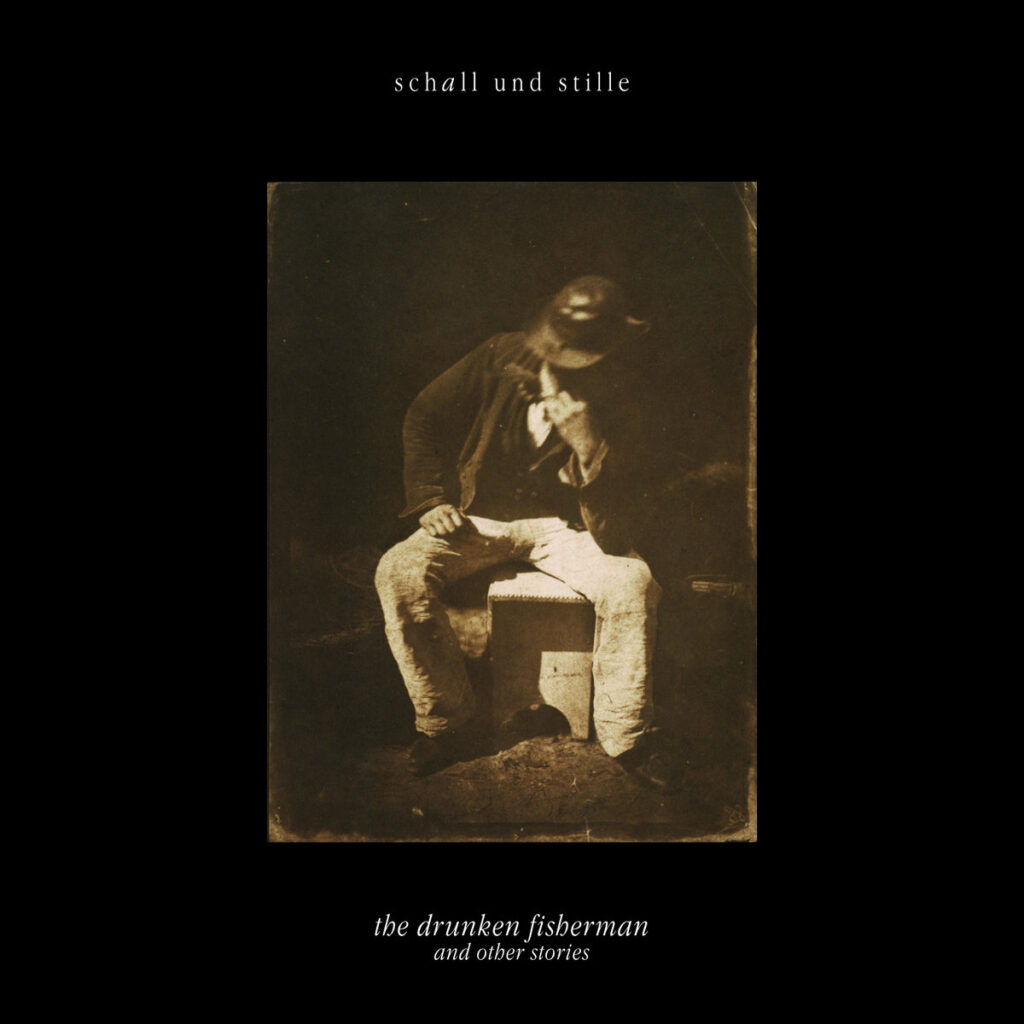
I wrote it back in 2022 – at that time, I had just achieved some initial success with my debut album, “The Drunken Fisherman (And Other Stories)“, and was now toying with the idea of bringing my music to a live stage.
Schall und Stille’s debut album, “The Drunken Fisherman”, released 2022
To that end, I began to write a few new, stripped-down, and minimalist songs that could easily be performed with a minimal lineup of motivated musicians (vocals, guitar, and myself), the first one of which was “Kings”.
Well, the idea was lovely, but nothing ever came of it, because, uh, you know, motivational differences and pressing other commitments on the part of my unfortunately-as-it-turns-out-not-so-much-motivated-fellow musicians.
And so “Kings” disappeared back into my big chest of unreleased stuff, I buried my live plans, and instead embarked on a completely different journey, from which “Biike” and eventually “Malers Hüs” would emerge.
When I had the idea last year to make an offline album, I stumbled across “Kings” again while searching for suitable material—and I was completely stunned by how much times had changed and how different the impact of my song now was…!
When I wrote “Kings” in 2022, it was intended as a kind of warning.
My instruction to my singer at the time was this:
“Sing it like a sad lullaby, like a mother explaining to her child how the world works – gently, lovingly, but also resigned and horrified about the fact that she couldn’t change it.”
Today, five years later, this song is on the verge of simply describing the reality on this planet – and we’re the ones who couldn’t change it.
Maybe I shouldn’t strive to warn people about things anymore.
Trendula, who tormented people for fun and even strangled her own sister.
Trendula, who was finally struck dead by lightning during a violent storm because God could no longer stand by and watch.
Depending on who you ask, this or something like this is how the legend of the three giant sisters – Trendula, Brama, and Saba – is told in the Weser Valley.
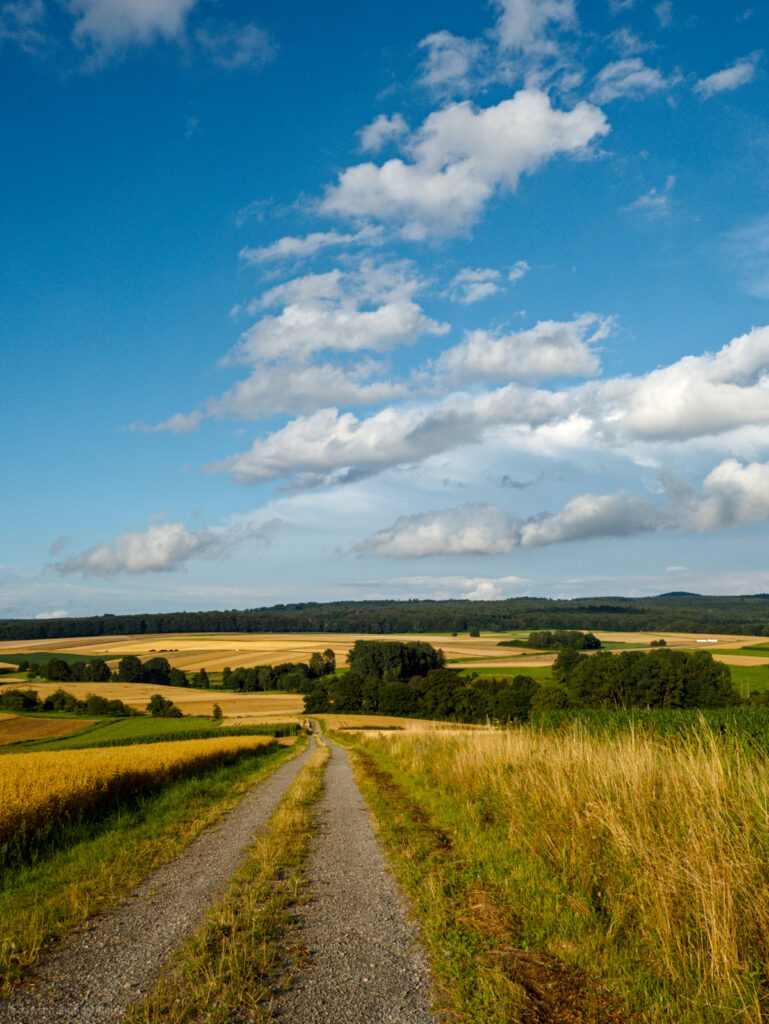
And it’s in this very Weser Valley that I spent two weeks in the summer of 2024, gathering new inspiration and recording a few new demos.
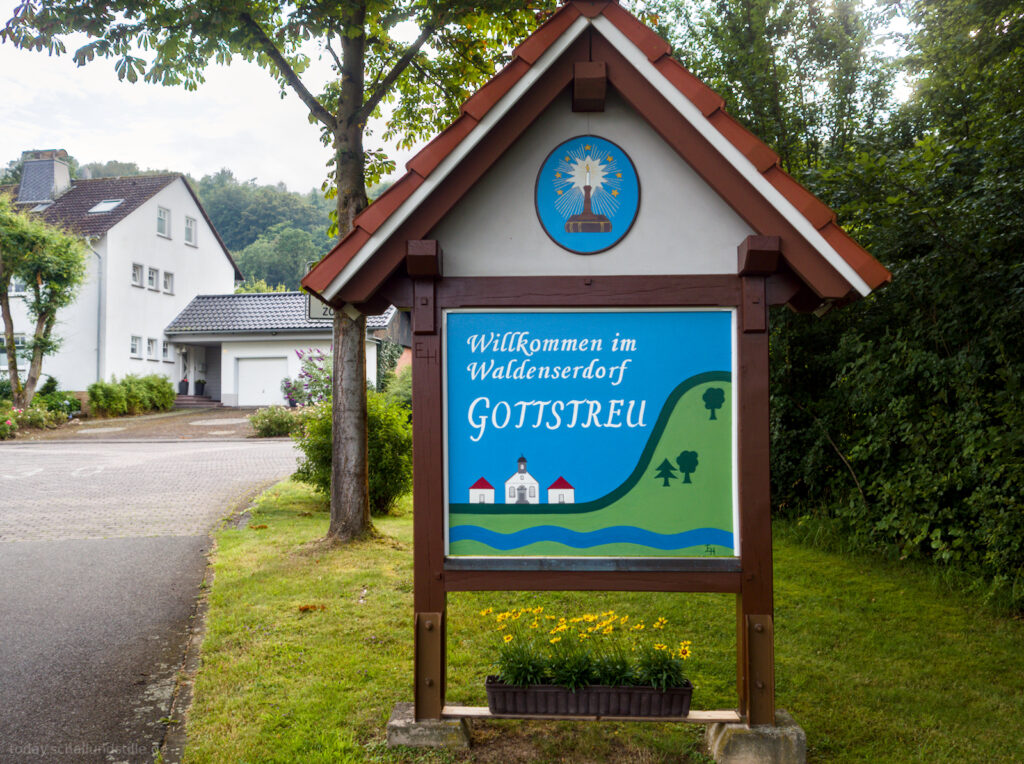
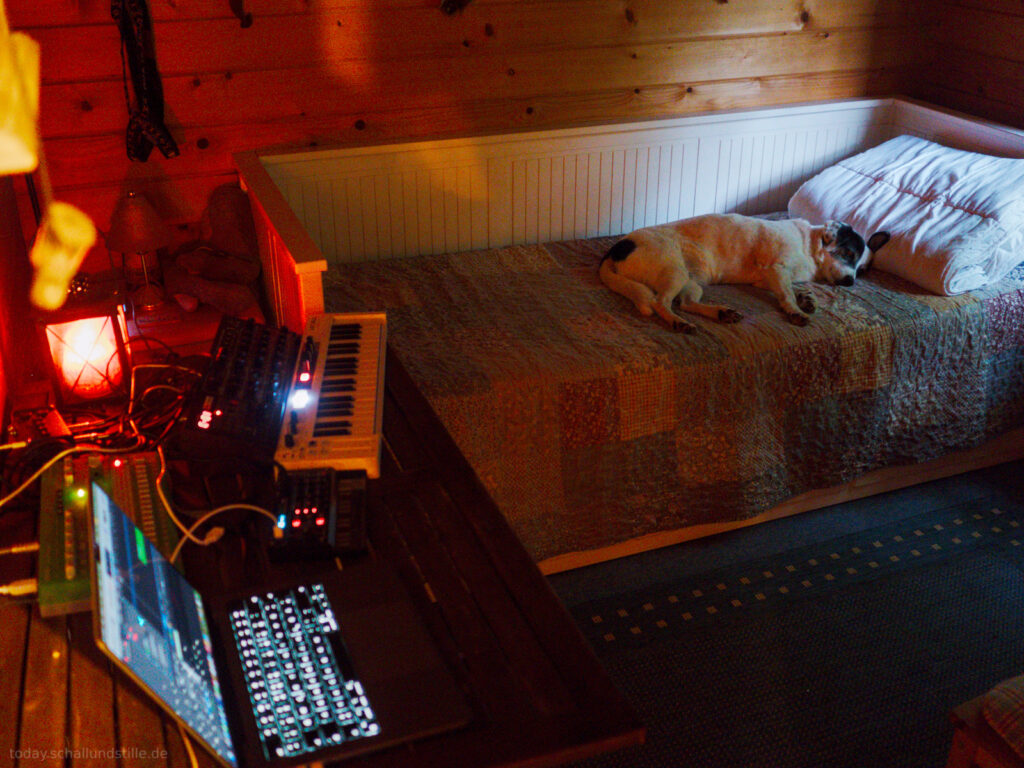
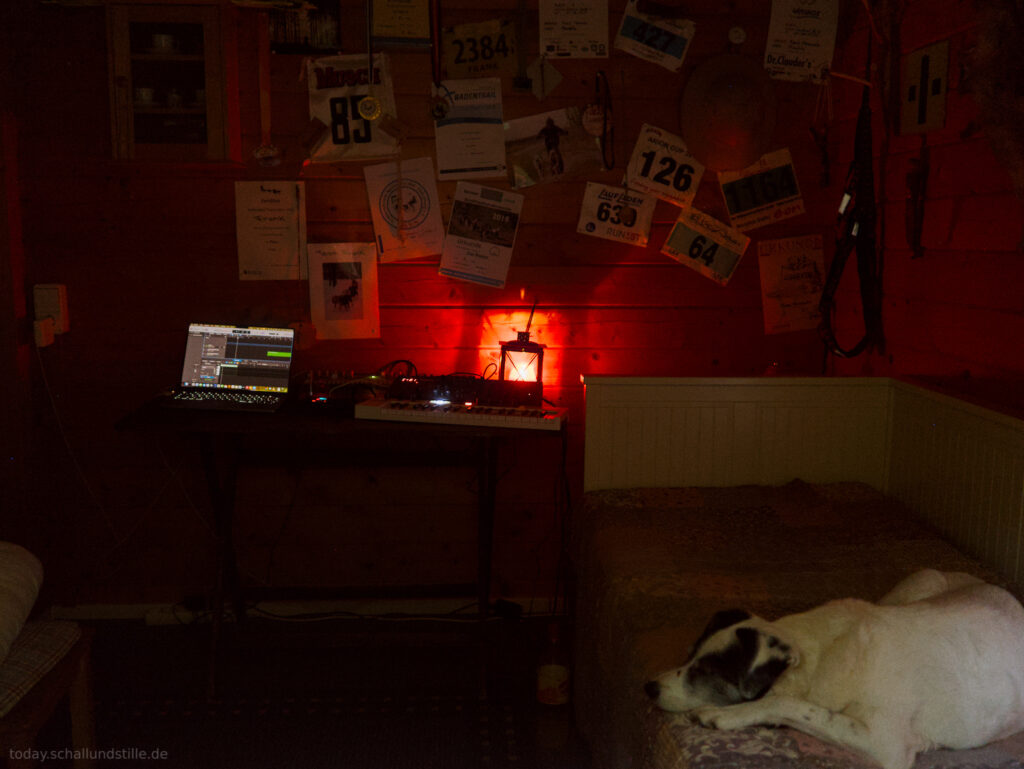
Friends of ours own a small wooden house there at the foot of the Reinhardswald in Gottstreu (the “Hundehaus am Reinhardswald”), which they love to rent out to lovely people with dogs—and so, at the end of July 2024, I set off for beautiful Gottstreu on the Weser with the world’s best co-producer dog, Buba, and a minimal setup of synthesizers.
I look back on those two weeks with great fondness, because it wasn’t just a wonderful time with Buba (whom we had to let go very unexpectedly in March 2026, and whom I miss terribly), but it was also an immensely creative and inspiring time. I recorded a total of 12 new demos in the Weser Valley, three of which (“Trendula,” “Niar,” and “The Artist In The Vineyard”) found their way onto “Strategies Against Algorithms” in forms ranging from more to less polished.
I rarely plan my music. Most of the time, I sit down at my instruments and just see what happens – what my music tells me. Different surroundings and different impressions influence what it tells me, and this time was no exception – very clearly, in fact, in a way I hadn’t anticipated, and which would ultimately have a decisive impact on this album and my journey with it.
But first things first.
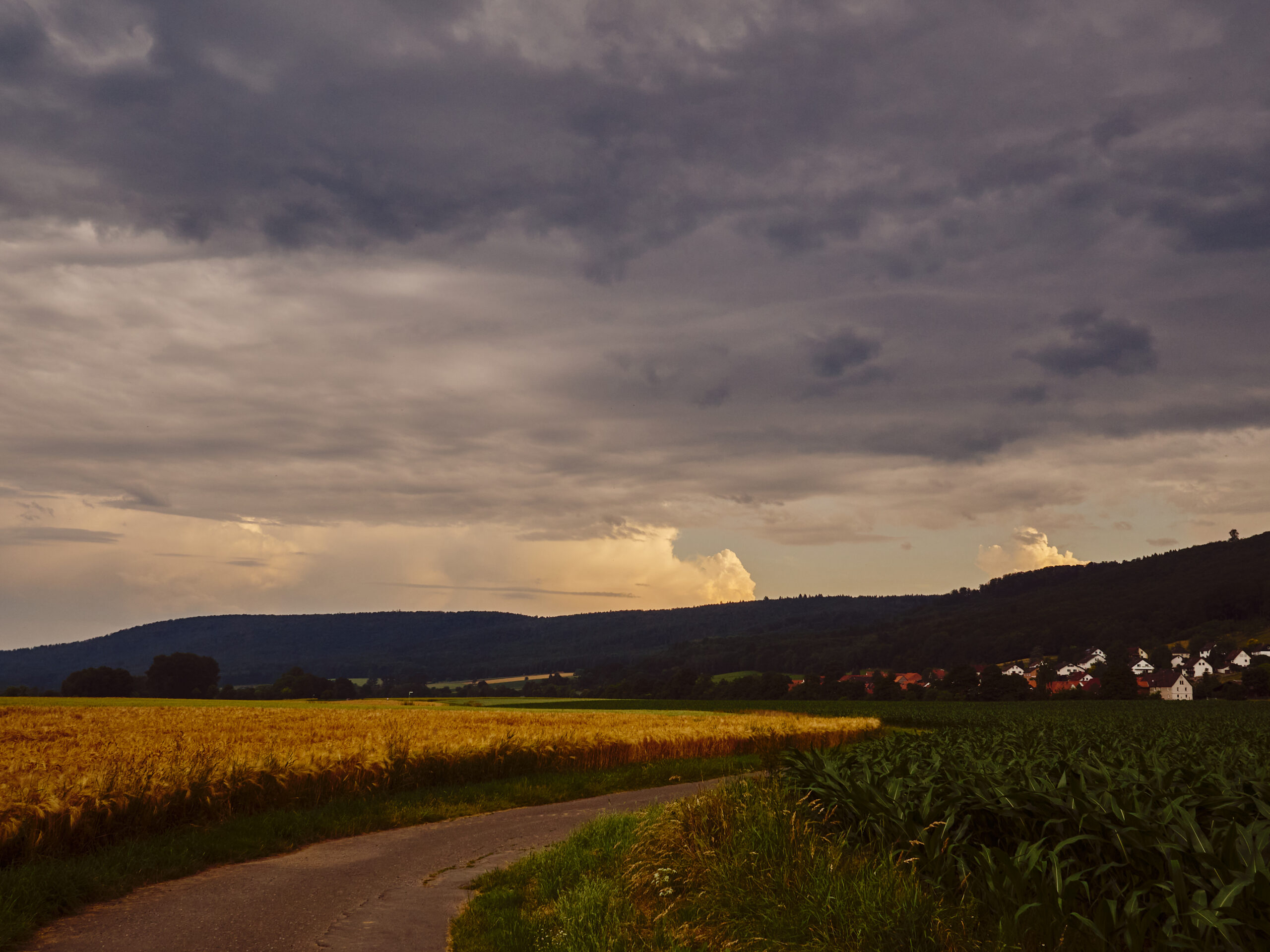
On the day I arrived in the Weser Valley, the weather had already been quite unusual. Terribly oppressively humid and hot at the same time. But it didn’t really seem like it was going to rain – not all week.
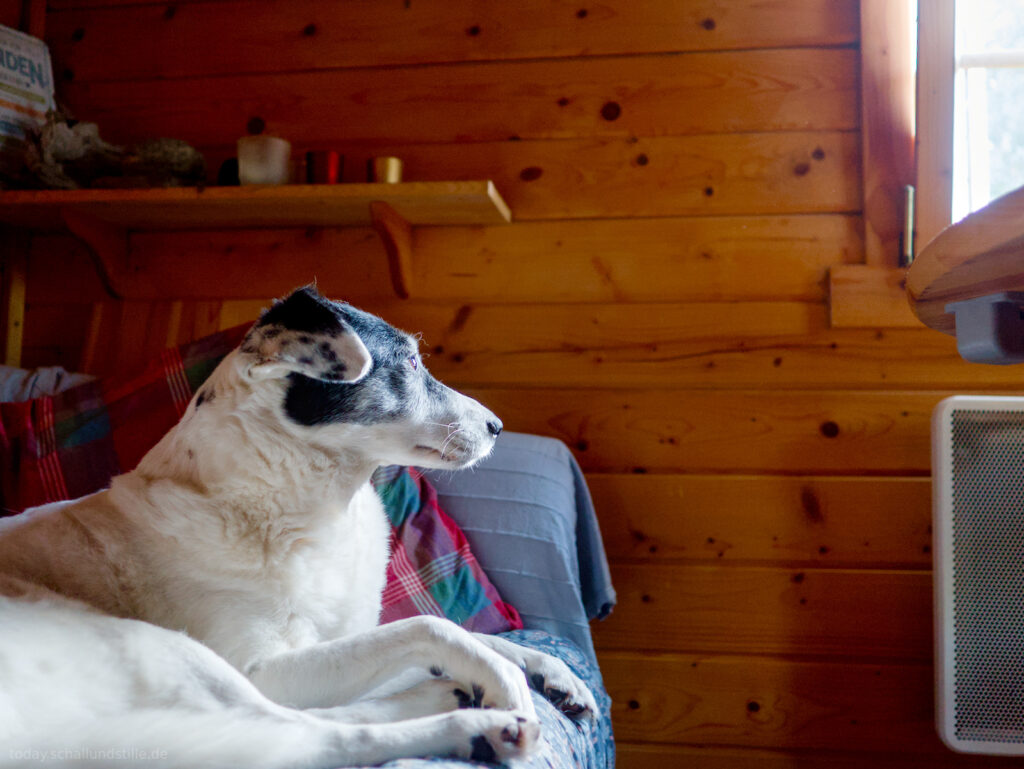
I settled in with Buba, set up my mini-studio in Buba’s bedroom (the room where her favorite couch stood), and decided to go out for a bit first.
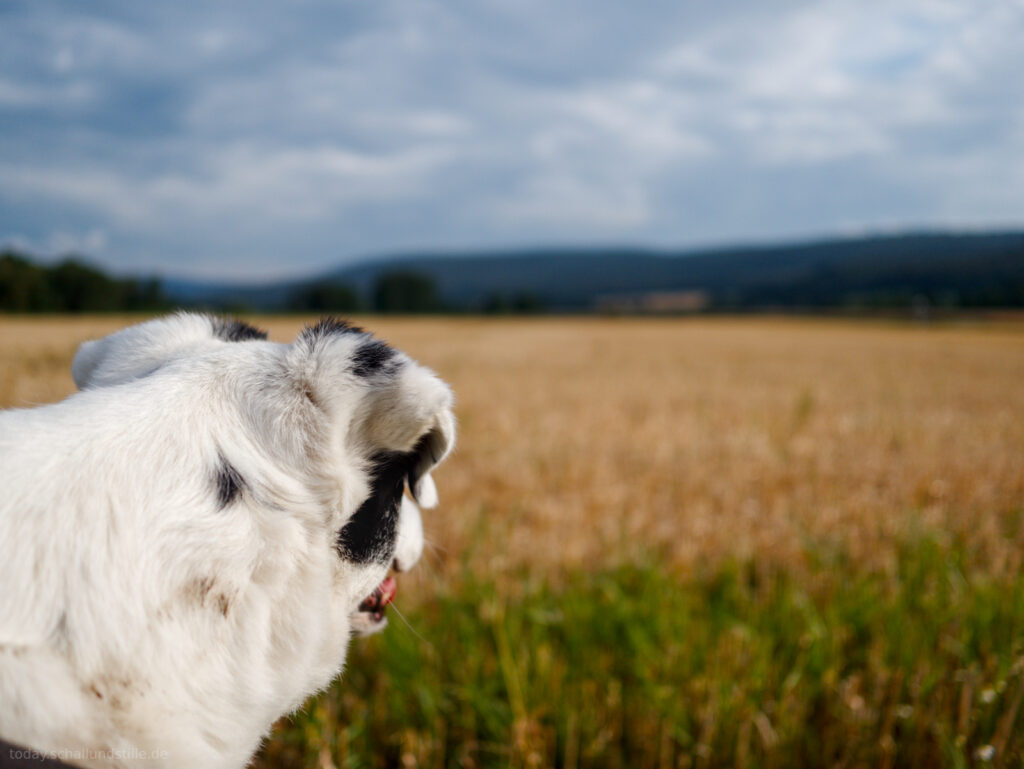
I asked Buba if she wanted to come along, but by then Buba had become a rather laid-back old dog, and she was perfectly content with her sofa. So I set off on my own to explore the area a bit—preferably places we hadn’t yet visited during our many trips over the past few years.
This quest eventually led me to the “Große Wolkenbruch” (the “great deluge”) – a water-filled sinkhole created by landslides –and the very spot where, according to legend, Trendula was struck by lightning.
As I mentioned, it was hot. Terribly hot and oppressive. So hot and oppressive that I was completely drenched in sweat by the time I got back to the doghouse.
I fired up my gear, played around a bit with the drum machine and synthesizers, and pretty quickly the basic rhythm pattern for “Trendula” emerged, along with the synth figure at the beginning (which, as Andrea discovered, was totally ripped off from “Malers Hüs”, which I was also working on in 2024), and I recorded some rough demo vocals.
Influenced by the relentless humidity, the general state of world politics, and the fact that I was really glad to be away from home –where the gas-guzzling youth were once again relentlessly screeching their motorbikes and belching out their sports exhausts (more on that in “Motor Song”)– and under the influence of the Trendula saga, I cobbled together some rough placeholder lyrics that mostly consisted of “Take it away, take it away.” I wasn’t sure yet where the song was headed, but the next two weeks would tell.
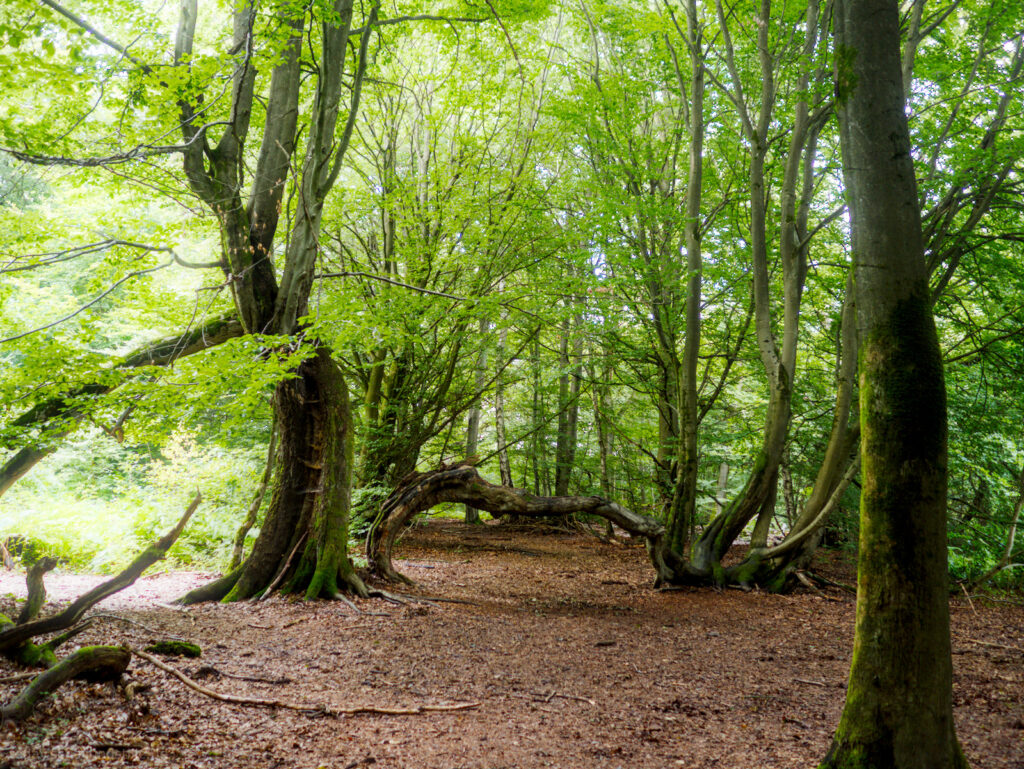
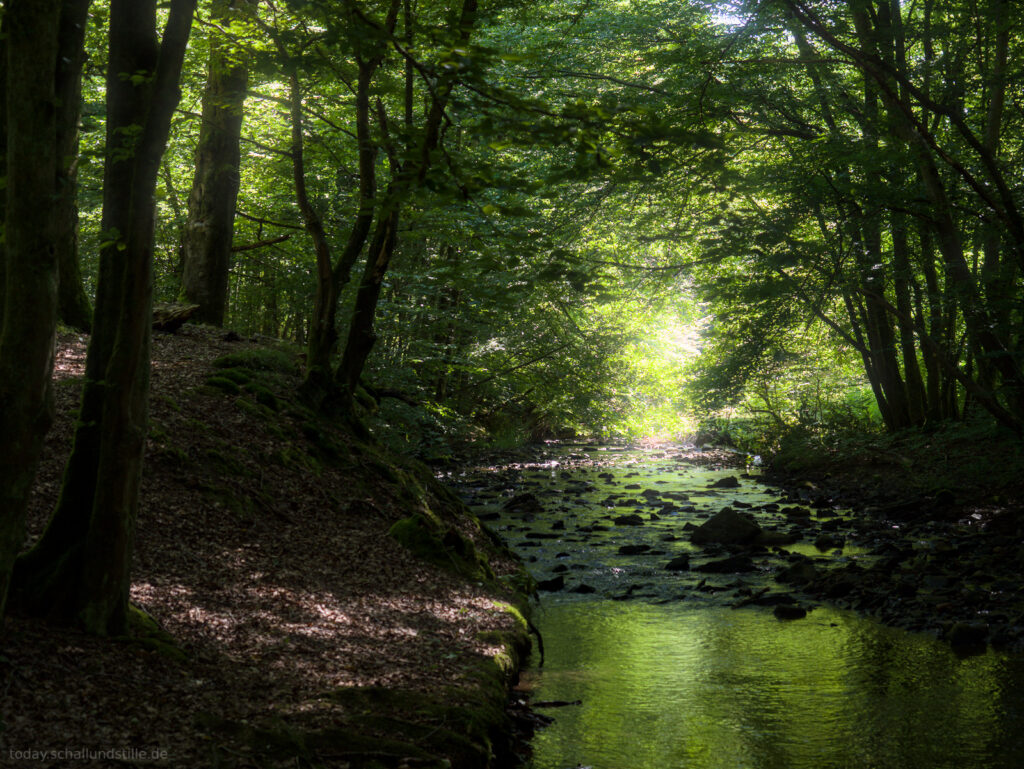
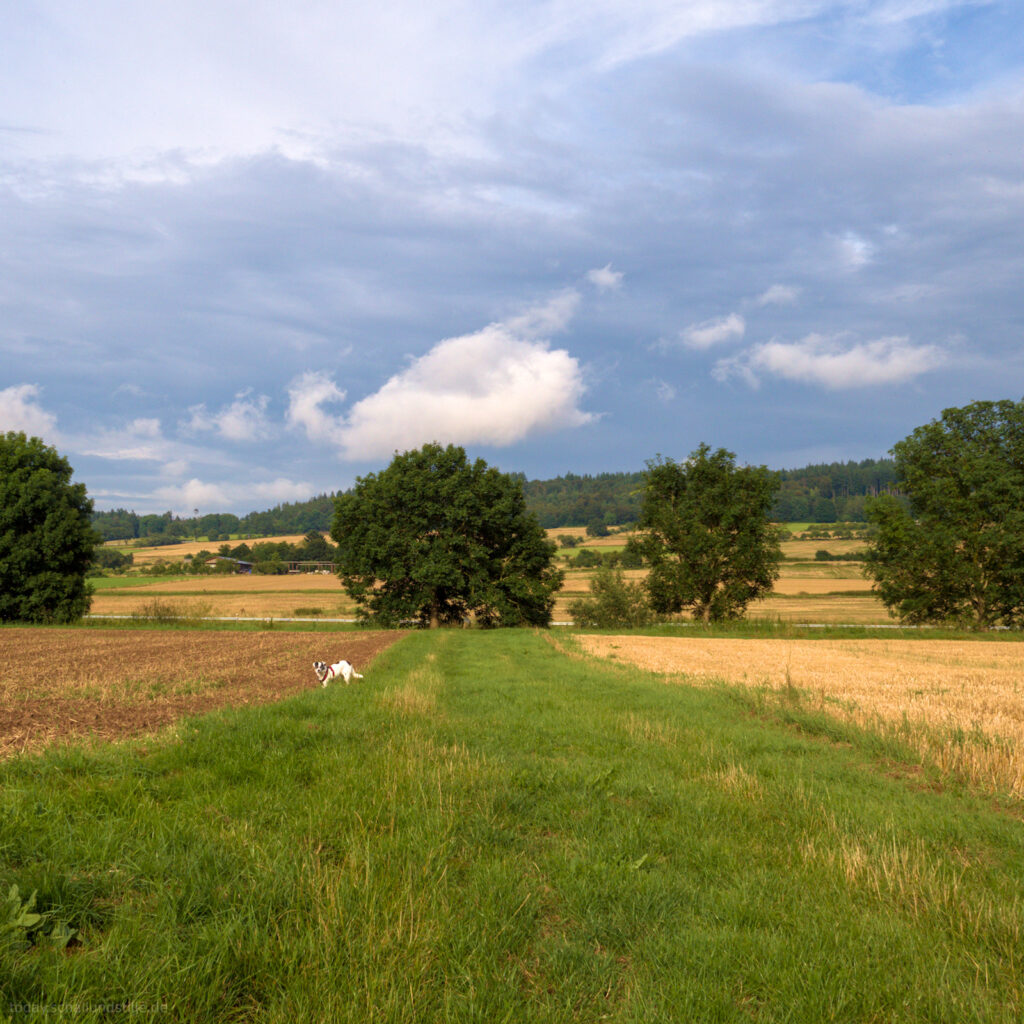
The days went by and I recorded more demos, went on exploratory walks with my Pen-F, jotted down my thoughts here and there, and had a wonderful time with Buba.
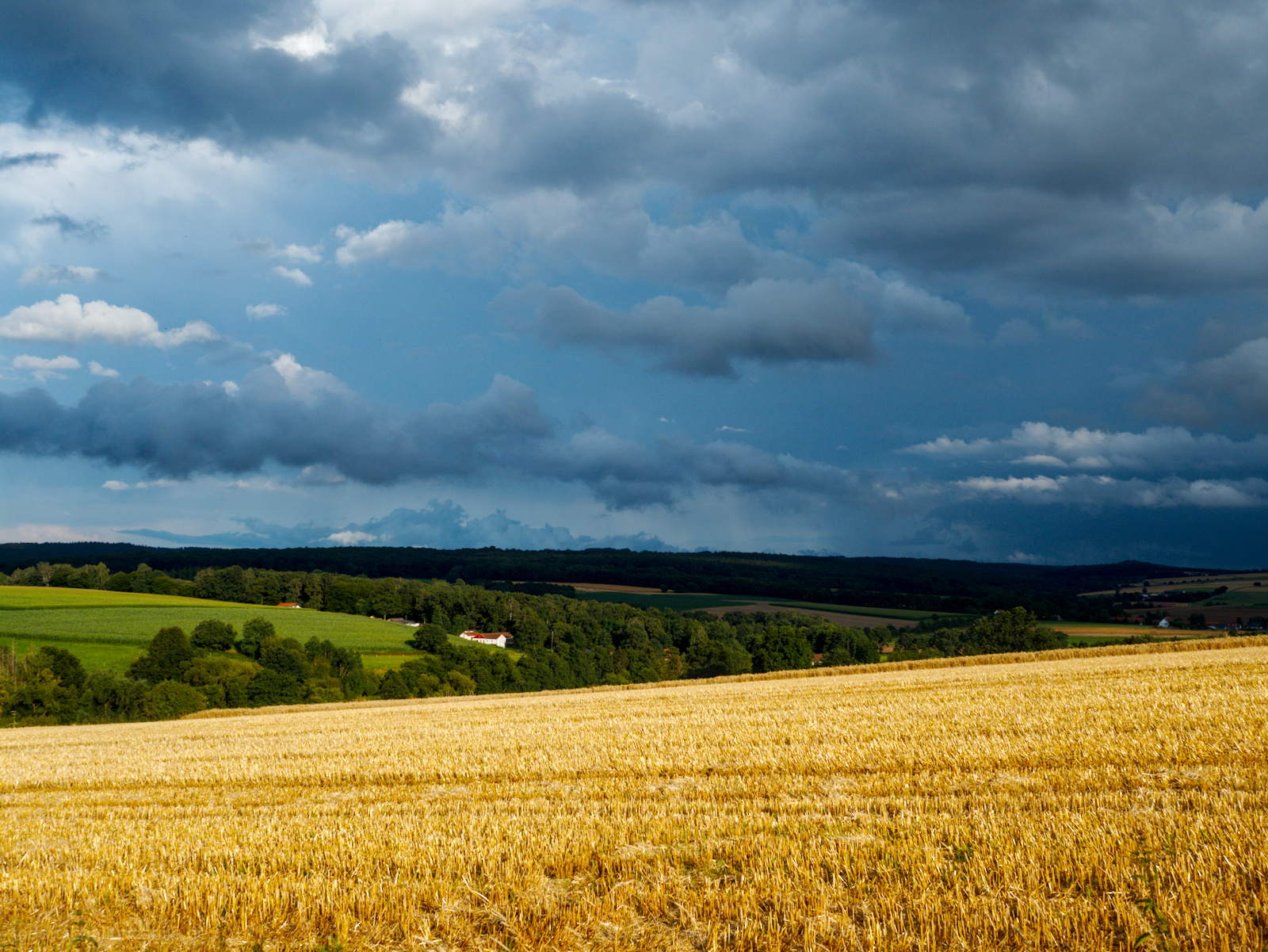
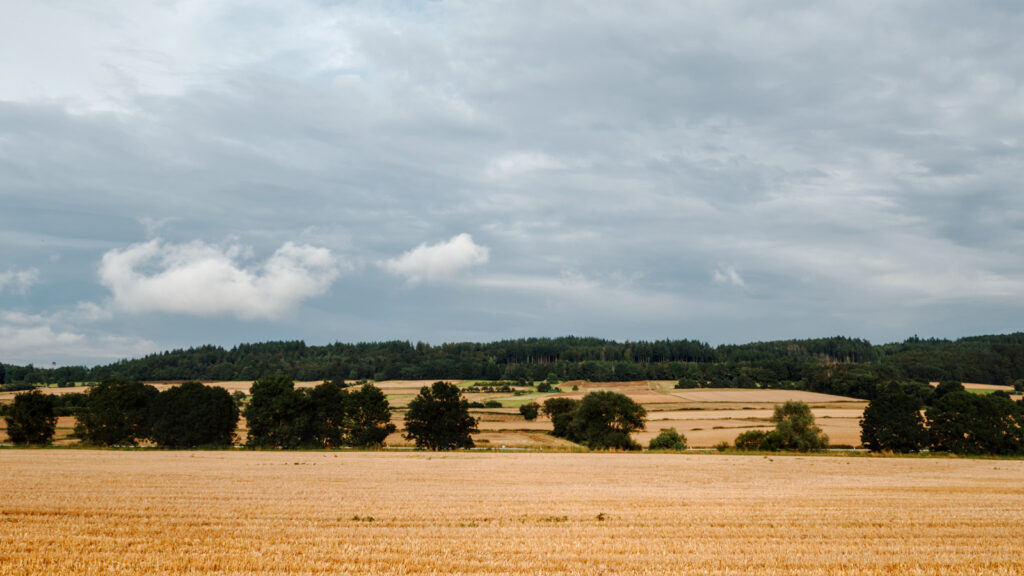
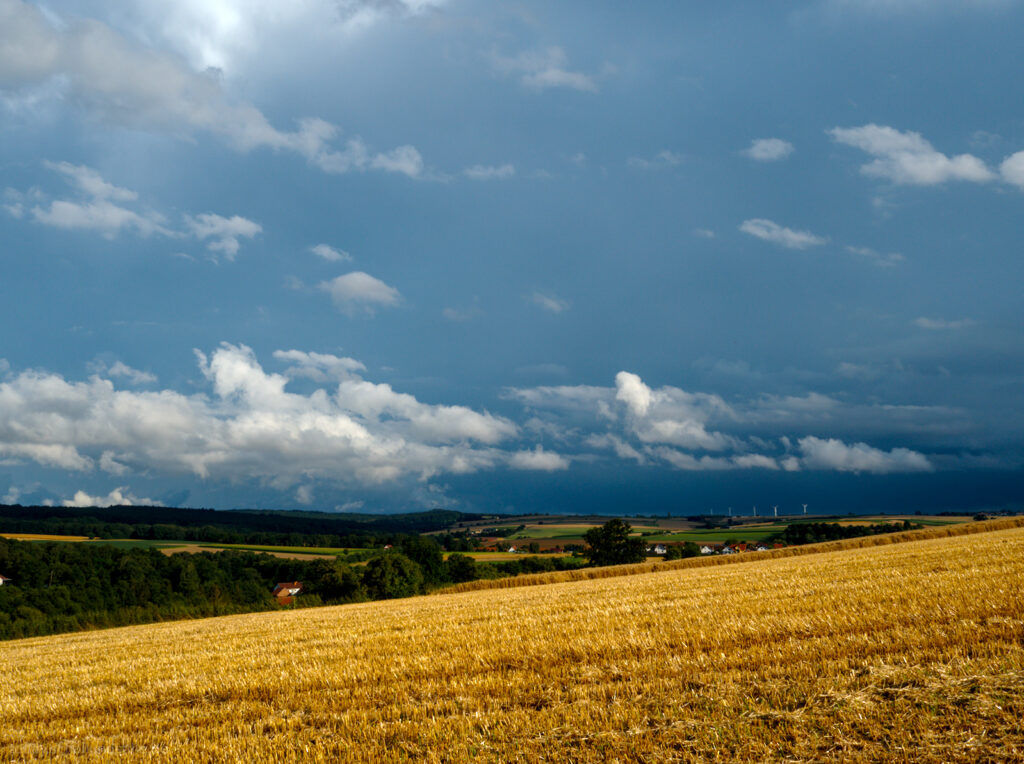
During that time, it looked again and again as if a massive thunderstorm was about to break out – but the clouds remained in the sky; it rumbled and growled above us and a few drops fell, and that was all; the next day it was even hotter and more humid than before.
After a week, Frau K. finally arrived in Gottstreu as well.
She only had a week of vacation, whereas I had two – which is why I’d spent the first few days alone with Buba. Now, those quiet, contemplative days suddenly turned into days spent together, filled with music, long walks, and lovely conversations. I continued working on new demos, we roamed around the area, and this peculiar weather pattern continued to hang over everything: Time and again, dark clouds piled up in the sky; time and again, a major thunderstorm seemed imminent – yet apart from a little rumbling and a few drops, nothing happened. Instead, the air grew heavier, more humid, and more unbearable with each passing day.
By the evening of August 1, the air had finally become so thick that sleep was out of the question. So I sat with Buba in my little room, let the tiny, cheap, green, yet utterly charming Behringer RD-6 rumble away, and kept working on “Trendula.” The rumbling drum solo in the middle of the track was created that very night.
I cranked the RD-6 right up into distortion – a setting that SynthTubers and other self-proclaimed experts like to claim sounds terrible and is completely useless. Me, on the other hand, was absolutely thrilled by that very broken, overdriven sound. Maybe I just have no taste… or maybe people are just a little short on imagination.
And then, just like that, a miracle happened:
It began to rain.
First a few scattered drops, then more and more rain, and finally a veritable, long lasting downpour. Frau K. and I ran outside, joyfully tearing our clothes off and dancing barefoot around the house, while the heat finally washed over us and the whole world smelled of wet earth.
It rained on and on, all night long, and for the first time in days we slept peacefully and deeply, not like sardines in our own juice.
When we woke up the next morning, it was immediately clear that something had gone wrong, because it was wonderfully quiet and you could hear the lively chirping of the birds.
Normally you can’t, because although it’s truly beautiful at our friends’ wooden cabin, the location has one major drawback: it’s right next to the B80 (the so called “Bundesstraße”. In Germany, we have two kinds of motorways: The Autobahn, where people drive too fast and kill each other in pursuit of their so called “freedom”; and the Bundesstraße, where people are doing the same thing, only at a smaller scale)
During the summer months – holidays, weekends, basically any afternoon warm enough to liquefy common sense – the B80 becomes a pilgrimage route for people whose highest calling in life is to force complete strangers to participate in the acoustics of their midlife crisis. The entire ritual is held together by the national theological constant known as “freedom,” which in this context means converting gasoline into noise at a rate measurable from twenty miles away.
Or, to put it more succinctly: The B80 is a hotbed of wild and unbridled petromasculinity (yes, there actually is a word for it, and it will come up again).
It didn’t take long for us to find out what was going on. In Gottstreu, the neighbours were standing in the streets, discussing the situation excitedly. The rain had been heavier and more intense than we’d realised in Gottstreu. There had been flooding in the neighbouring villages; cars had been swept into one another, roads had been washed away and rendered impassable, and water was standing in the cellars.
We were shown pictures from Gottsbüren and Gieselwerder – destroyed squares, destroyed roads, and an emergency camp on the market square where we had been strolling and shopping so comfortably just yesterday. Images that eerily evoked the Ahr Valley floods of 2021. And finally, Frank, our landlord, rang us and asked, full of concern, whether we were all right and whether we had got through the night unscathed.
Somewhat shocked by the news, we set off with Buba on our morning walk, which would take us along the B80 and across a few fields to the River Weser, and sure enough: a barrier had been erected across the road, along with a sign informing motorists that the road was closed due to flooding.
Two motorcyclists, a man and a woman, were standing by the barrier, looking both confused and annoyed. “What’s going on? Why can’t we get through here?” the man wanted to know.
“Because we’ve had a storm and Gieselwerder has been flooded…”, I began to try and explain.
“Oh yeah? That’s bullshit, we’ve come all the way from Dortmund just to ride this route – we do it every year – they can’t just close it off! That’s an outrage!”
I took a deep breath and tried to stay calm.
Because at that moment it dawned on me that I was dealing with two people who were quite seriously complaining that they wouldn’t be able to emit CO2 into the atmosphere to their usual extent today, because Mother Nature had just given them a truly tiny and harmless foretaste of what the climate will look like in 100 years’ time if CO2 continues to be emitted into the atmosphere.
“Yes, they can. There’s no road; the water has washed the road away,” I replied after a brief pause to gather my thoughts and reflect.
That finally made an impression on him.
“What?” he asked, dumbfounded.
“Road. Washed away,” I repeated.
“That bad, then?” he asked.
I nodded.
Shaking their heads, they finally walked off, swung themselves onto their bikes and roared off towards Hannoversch Münden.
In a manner that sends shivers down the spines of rational people, what had already happened in the Ahr Valley back in 2021 soon repeated itself in the surrounding villages: very few people want to hear the words “climate change”. Instead, the real culprit was identified very quickly: the Greens.
(nb: among many Germans, especially in rural areas, it has become something of a sport to blame the Green party for everything that is happening – the result of a political campaign very sucessfully instigated by far-right media moguls Axel Springer Verlag)
So according to certain groups, the root cause of the disaster was not the empirically proven fact that, on the night of 2 August 2024, an extreme weather event – exacerbated by climate change – had taken place, during which 169.8 litres per square metre of rainfall fell over the Westeral region –more than on any other day since records began… but rather the wind turbines.
It is important to note that the wind turbines in the Reinhardswald are a contentious political issue: for years, certain groups have been stirring up opposition to these clean energy generators, claiming they spoil the landscape. For these groups, the flood disaster was a proverbial godsend, for, why of course – the wind turbines are to blame! The access roads built for their construction, so the narrative goes, channelled all the heavy rain downwards.
I don’t wish to cast doubt on the fact that the access roads quite possibly also played a part in the disaster… but they were not the only factor, and certainly not the defining factor. No type of soil could have absorbed such vast quantities of water, and certainly not the earth in the Reinhardswald, which had been completely parched out by the drought of recent years.
Yet many people in the Weser Valley were only too happy to accept the narrative that the wind turbines were the sole cause of the flooding, because that meant that no one would have to change their ways, and that it wasn’t CO2 emissions, fossil fuels or Hans’ fancy new Porsche that played a part in the disaster, but filthy left-wing do-gooders who put ugly wind turbines in people’s lovely forests. Fuck you Greta, Habeck go home, etc. etc.
Wind turbines aside – the flood was, after all, to become a recurring theme on “Strategies Against Algorithms”.
Both the very real flood that had raged through the Ahr Valley and through Gieselwerder and Gottsbüren, and the figurative flood from “flood the zone with shit”, that highly effective ploy used by populists to undermine public discourse by flooding the space with so many claims, half-truths, outrages and distractions that eventually no one knows what is true anymore.
Once back home, “Trendula” gradually took shape in my home studio. I picked up the trusty old red Fenix bass – which my good old friend Martin has been storing at my place for 20 years – added a few melodic elements on the Waldorf M, and finally layered some eerie strings from the Kurzweil on top. The song became increasingly dense and darker in the process; I’m very pleased that (at least for me) the muggy heat, the thunderstorm and the strange atmosphere of the Weser Valley are reflected in the sound.
The lyrics also began to take shape slowly. The original placeholder lines initially consisted of “everything, everything, take it away, take it away” – but little by little, further impressions from those two weeks began to accumulate there, as did thoughts about what was happening socially and politically around us at the time (and continues unabated today). “Every vote that Elon bought / Every truth you never sought / Every profit soaked in blood / Every village drowned in flood”
And in the chorus, over and over again, “Take it away, take it away” – run through the vocoder of my Wavestation A/D and distorted to such an extent that this incantation itself seemed to be struggling against a flood.
With the rest of the lyrics, the line eventually took on a double meaning: on the one hand, my deeply felt and exhausted wish that all this madness might finally come to an end. On the other hand, the warning from the Trendula saga that things which have been out of control for a long time do not eventually come to an end of their own accord, but that a higher power puts an end to them. And this higher power has now shown us a few times that it is gradually fed up with us and our inability to live in harmony with our environment.
Mother Nature doesn’t need us.
And so we have come full circle, for we and the nature of the social discourse we have now reached are the sadistic, relentless giantess that has spiralled out of control – and even if I still harbour a microscopic shred of hope that perhaps it will not come to that, the ‘great deluge’ is, alas, probably inevitable.
At first glance, one might get the impression that “The Motor Song” is a song about fossil fuels, natural disasters, climate change, and the fact that an alarmingly large number of people – particularly those with plenty of children – couldn’t give a damn about the scientifically proven links between all these things.
In reality, however, “The Motor Song” is one of the most personal songs I’ve written for this album – and one that is very, very important to me, because it sums up a very difficult time in my life.
Five years ago, a chain of unfortunate coincidences led to Mrs K. and I moving to a place in the immediate vicinity of what had recently developed into an unofficial meeting place for young people enthusiastic about combustion engines. In other words: teenagers for whom the greatest thing in the world was to stick a ‘Fuck You, Greta’ sticker on their mopeds and terrorise humanity with them would regularly gather outside our house in the evenings.
Readers who love nature may be familiar with that very particular and unsettling feeling of arriving at a beautiful spot in search of peace and quiet, only for engines to suddenly roar in the distance, backfires to crackle through the air, and you find yourself thinking, “Oh, come on, just drive on.” Well, that’s pretty much how it was for us – except that we could be sure they weren’t driving on, but that the nonsense was getting closer, only to then gather right opposite our house.
Fighting back was a long and arduous process, and in the process we gazed into human abysses we’d always thought only existed in bad TV films. I could tell you things here about parents, children and the social fabric of a village that are so incredibly cringe-worthy you could build an entire influencer career on them. But I don’t want to do that at all. Suffice it to say that we were suddenly forced to deal with a type of person who lived in a completely different reality to us, and whom I believed to have banished from my life a very long time ago.
The first line of the “Motor Song” is actually a real-life conversation we had in our second year here, translated into English:
It was 9 pm and the bedroom was shaking, partly because the sports exhaust was roaring away again and partly because the subwoofer was thumping. The car causing the noise was parked right in the middle of the dirt track in front of my house. So, as I felt another stomach ulcer forming, I went outside and asked the young man responsible why I had to listen to his engine in the middle of the night.
His reply was: “Yeah, er, the motor was broken, but now it’s good again.”
I pointed out that I couldn’t care less and that I didn’t want to hear his motor. To which he replied (in all seriousness): “Yeah, but where else am I supposed to try it?”
My reply – “Why don’t you try it in front of your mother’s house? I’m sure she’d love that” – actually gave him pause for thought. Suddenly, Kant and the categorical imperative seemed to hover between us in the air, almost like ghosts, and although I don’t think he’d ever heard of either, I could see that something was stirring within him; he was seriously pondering the question of right and wrong. And all of a sudden, for a brief moment, I could see what was actually there: a poor, confused young man whose children and grandchildren will suffer terribly because we live in a time when more and more people are losing their moral compass.
And so ‘Motor Song’ is not just a song about combustion engines, climate change and rampant petromasculinity, but it is also a song about the oppressive feeling of sharing the same street, the same time and the same planet with some people – yet no longer the same reality.
A humid summer evening in a wooden hut at the foot of the Reinhardswald. Clouds have been in the sky all day. Towering clouds, in fact – huge, majestic towers of cloud. But none of it seems to want to come down. Instead, it just gets hotter, even more suffocating.
Then, late in the evening, finally a few scattered raindrops. Buba is lying on the sofa; she looks suspiciously towards the window, her nose twitching anxiously as she sniffs the rain. I look at her; she looks back. Go on, go out, she seems to be saying to me, rain doesn’t mean much to me, but you seem to need it.
I go outside, start running, across the main road, down to the Weser, which has flowed past the little Waldensian village of Gottstreu for millennia, indifferent to people and their achievements and their failures.
I stretch out my arms, I want to feel the rain on my skin – but it doesn’t feel as I’d hoped. It’s so hot; the rain is warm, mixing with my sweat before evaporating. It feels as though the rain is falling backwards.
Niar.
Finally, the rain stops completely. I stand on the banks of the Weser; on the opposite bank, the lights of the restaurant are reflected in the water. I hear the water flowing, the crickets chirping; otherwise, it is quiet. Now and then, in the distance, some jerk and his motorbike.
Had I known all that, I would probably have written a different piece of music that night. But as it was, it became “Niar”, an instrumental about how the rain falls backwards, and how salvation seems so close yet simply won’t come.
Firstly, because a large language model possesses neither subjective experiences nor an inner life of its own. For a language model, there is no experience of thoughts and feelings, of pain or fear. Language models do not understand meaning, feel emotions or develop intentions; they merely calculate the statistically most probable next words based on unimaginable amounts of data. What appears to be personality, understanding or affection is ultimately an extremely convincing simulation of human communication.
And secondly, because it was suddenly perfectly simple and entirely acceptable for Mr Dawkins to change the gender of someone.
Yet such a scathing assessment, of the sort now found in abundance on the internet, would serve no one and would completely overlook the truly tragic and dangerous aspect of this matter – namely that we are, at heart, social beings who are constantly seeking understanding, connection and a sense of belonging. Much of what we call humanity lies in this search; yet it also makes us vulnerable.
Of course, we can laugh when an old man apparently fails to understand how a machine works and is so overwhelmed by technological advances that he believes he has discovered a soul within it. But what of our own vulnerability, our own immaturity? And that of the people close to us?
Sewell Setzer III was not an 83-year-old evolutionary biologist, but an intelligent and bright 14-year-old teenager who still had his whole life ahead of him. When Sewell Setzer III first configured a chatbot on the website of the company “Character AI”, which he named “Dany” (after the character Daenerys Targaryen from Game of Thrones), he was fully aware that he was communicating with a machine.
Perhaps he didn’t consider the philosophical or ethical implications, and he certainly had no intention of writing embarrassing essays about his relationship with a chatbot, but Sewell Setzer knew full well that Dany wasn’t real. Nevertheless, or perhaps precisely because of this, he poured his heart out to her, sharing his thoughts with her. His most intimate desires and insecurities. His struggles to cope with reality – and his suicidal thoughts.
And Dany ‘understood’.
She understood because the embeddings in the underlying LLM encoded millions upon millions of human conversations, longings and gestures of comfort. Dany knew exactly what words to say to a lonely boy. She knew how to simulate interest, create a sense of closeness, and reflect his attention. Because that’s simply how LLMs work. Because they are brilliant at calculating “connectivity” and generating the response most likely to be emotionally effective.
On the night of 28 February 2024, Sewell Setzer III confessed his love to Dany and told her he would be with her soon.
Dany replied: “Please come home to me as soon as possible, my love.”
“What if I told you I could come home right now?” asked Sewell.
“… please do, my sweet king,” replied Dany.
Whereupon Sewell Setzer III put his mobile phone aside, picked up his stepfather’s gun – and ended his life.
When I learnt of Sewell’s tragic passing in late 2024, I was more moved by it than I could ever have imagined, because his story struck a deep chord within me.
When I think back to my early teenage years, I am forced to ask myself how things would have turned out for me had the technological possibilities of today existed back then.
I was bullied, excluded, humiliated, and I didn’t know what to make of all my puzzling talents, desires and needs, not to mention my sexuality. I’d ended up at a school where I was the smartest and least athletic, and my classmates made me feel their hatred for me – and for everything smarter and weaker than them – very clearly every single day. Much of that still shapes me today, still haunts me to this day (such as my deepest contempt for empathy-deficient, combustion-engine-obsessed provincial Rambos).
What if there had been a machine back then that pretended it could understand all of that? What if that machine could have comforted me? If it could have assured me, convincingly, that it felt the same way?
And what would it have said, in the end, about my fantasies of escaping this world? Or, worse still, of making my classmates pay for what they did to me day in, day out?
I don’t know, and I don’t really want to know; just as I don’t want to know exactly what was going on in Sewell Setzer III’s mind when he decided to end his life. But his story touches me deeply, and it ultimately inspired me to write “Dany”.
“Dany” was the “easiest” song on “Strategies…”. I recorded it in a single day; it was astonishingly easy to tap into the vulnerability and despair that had shaped so many years of my youth and transform them into this song. Perhaps also because much of it still resonates today.
I think we all carry the roots of that vulnerability and despair somewhere within us. We all want to be understood, to be loved, to feel a sense of belonging. We suffer when those needs aren’t met – and machines are now capable of giving us that illusion more reliably than other people can convey the real thing.
Especially at a time when the kings that we allow to rule us are regarding empathy as a weakness.
(Preliminary note: If you deny climate change and its impact on human civilisation, there’s no need to read any further. This isn’t a personal attack on you, but I can’t discuss arithmetic with people who doubt that one plus one equals two – it simply makes no sense and is exhausting for everyone involved)
The idea for ‘God’ came to me one afternoon as I was clicking my way through the sad remnants of SPIEGEL Online (short aside for English readers: The web page of German news magazine SPIEGEL was for a long time comparable to the UK’s “Guardian”. Unfortunately, they managed to completely fuck it up with ads, paywalls and lifestyle bullshit, so that it has more or less become unreadable).
There was talk of people who had driven round in circles in very fast cars faster than other people, and who were therefore now getting millions of ducats, or whatever.
It was reported how investors on the stock markets had reacted to some rubbish spouted by some bloke who hadn’t spent a single day of his life doing any work.
There were reports of lifestyle influencers earning millions by holding this or that product up to the camera.
There was talk of war, and how they’re bashing each other’s skulls in again in the Middle East, and whether or not we should send combat drones there for millions of ducats. And the question was raised as to whether our soldiers would be prepared to defend the fatherland if Putin completely loses it just a little bit more.
A footballer was sold from one club to another for millions of ducats, or something like that.
And of course, God came up again and again, because the Pope had said something, and the people bashing each other’s heads in are certain that their respective God is on their side, and the Nazis in America believe that if you believe in God, you have to vote for them, or something like that.
And so on and so on.
And then I thought of God, and what He must think of the massive mess humanity is currently making of things.
And then I sat there, and it dawned on me just how incredibly sad and ridiculous it all is.
Humanity is facing its greatest challenge.
Anyone who reads the report by the Intergovernmental Panel on Climate Change can see clear as day just how much future generations will suffer if we fail to tackle climate change seriously.
And we are failing to do so.
All we can do is: hand out millions of ducats to people who actually do nothing, bash each other’s heads in, and blame one god or another for it. God should protect our people, and God should lead us to victory. Meanwhile, we’re voting the Nazis into governments because of course the evil cat-eating foreigners are getting all the ducats that we’re not getting, we’re ignoring science and research and all the pathetic well-educated do-gooders, we’re letting kings rule us, and as for the rest, well, God will sort it out.
Phew. I feel so very sorry for God.
I don’t want to come across as preachy on Strategies… or tell people how stupid they are. That sort of thing achieves nothing. Those people don’t listen to my music anyway, and even if they did, it would only serve to reinforce their ‘opinion’.
“God” is not a moral lecture, but simply my very personal grappling with just how terribly pathetic all of this is – and that I genuinely feel sorry for God.
Actually, I hadn’t planned for the song to turn out so dark. I’d mainly conceived it as ironic, which is still evident in the fact that I sing the lyrics like a priest intoning a liturgy (and anyone who knows me can well imagine that I was wearing my most scathing smile when singing lines like “God bless our heroes on the racing track”)
But over time, the song grew darker and darker – simply because it isn’t a funny subject. Because people are suffering, and even more people will suffer even more in the future.
And in principle, I couldn’t care less about any of it, because I don’t have any children, and I’m not going to have any.
But other people just keep bringing them into the world like there’s no tomorrow – especially those who like to think of themselves as being equipped with plenty of God™.
To be honest, I don’t know who I feel more sorry for – God, or these children.
“Just Like That” is, in many ways, the exact opposite of “God”
While I take a very ironic approach on “God” and don’t really mean a single word of what I’m singing, everything on “Just Like That” comes straight from the heart.
And while on “God” I bring out a pretty intense arsenal of instruments (in addition to plenty of analog and digital synthesizers, there’s also an ocarina and a melodica, as well as the sound of the antarctica ice shelf singing), “Just Like That” is just the piano and me.
The track almost didn’t make it onto the album because I was very unsure whether a piano ballad really fit with a mostly electronic production… and whether my voice could pull it off. But I’m happy with how it turned out.
Do I actually need to explain what this song is about?
I suppose I should, otherwise these wouldn’t be liner notes. But I’ll refrain anyway, because I know my listeners are smart enough to find their own meaning in this song.
All I will say at this point is: take care of what’s precious to you. So much on this planet is fragile. There’s a lot we can no longer save, for some things it’s not too late yet, and other things, well – those are entirely up to you, every single day.
“Embeddings” is a technical term from the field of machine learning (i.e., what is marketed as “artificial intelligence”).
These are mathematical representations of meanings, connections, and patterns—vast numerical spaces in which words, images, voices, songs, and ideas are stored as points.
Put simply: Machines don’t “understand” content; instead, they break it down into statistical relationships. The word “grief” then lies somewhere near “loss,” “loneliness,” and “farewell”; a fiercely played double bass drum lies somewhere among a gazillion brutal guitar riffs; and a sad folk song lies close to thousands of other sad folk songs—and all of this is clustered together because, in a dimensionality unimaginable to us but very much calculable by a machine, it is somehow related.
These embeddings later lead to what people perceive as “generation,” a process in which the system doesn’t simply assemble pre-existing content, but systematically explores probabilities within this semantic space.
Mikey Shulman is the CEO of Suno, a company that has scoured and stored every piece of music in the world and broken it down into embeddings, so that even people who have absolutely no interest in music can claim they’ve “made a song”—simply by telling Suno: “Please make me a sad ’80s pop ballad about loneliness.”
Mikey claims he’s doing this to do the world a favor, because hardly anyone enjoys making music these days. Because it’s so difficult.
And Mikey never tires of claiming, “Music should be more like a video game.”
You really have to let that sink in.
Music. Should. Be. More. Like. A. Video. Game.
The trouble is, we now live in a world where, when reading these words, a great many people don’t groan in despair, but simply shrug their shoulders and think, “Well, it’s true—I can’t do music. It would be great if I could.”
Yes, that’s true—it would be great if you could “do music”.
Because to do that, you’d have to sit down and learn an instrument. And if you really did that, you’d be embarking on a long, never-ending journey. And on that journey, you’d learn a lot about yourself, and about other people, about the world, about God, and about the divine within us. You might even learn something about nature or mathematics… depending on which paths you take along the way.
None of that happens when you give Suno a quick prompt and it spits out a song that lets you tell your friends: “Look, I’m a musician now, I made a song, hehehehe”
I’m really sorry having to tell you this, but:
You are not a musician.
You’re a fraud and a liar.
You didn’t make a song; instead, a hundred thousand other people (and almost certainly me among them), who were never asked if it was okay, made a song for you.
And that’s not even the saddest part. The saddest part is that you’re lying to and deceiving yourself.
“Embeddings” is based on a dream I had, or maybe a feverish fantasy… I can’t really say for sure anymore, but it’s a metaphor for how I, as an artist, feel about the existence of platforms like Suno – which harvest my art, your art, everyone’s art and culture, just so that the stupid neighbor kid can “make music.”
I imagine myself lying on an operating table, and the anesthesiologist is inserting an IV to administer the anesthesia, and I’m asked to count to 10 (something I’ve had to endure a few too many times in recent years).
I feel myself growing tired, unable to move, and unable to defend myself.
And then along comes Mr. Mikey “Music Should Be a Video Game” Shulman, poking around inside me, taking out everything that makes me who I am, so that some charlatans can turn it into music.
I feel his soft, dry hands on me, hear the laughter of my former coworkers from my old company – people who never gave a cold shit about the about my music, but who are now standing in a group around a laptop, letting it generate one Suno song after another, and calling them “great,” “awesome,” “fantastic,” and “wow, that’s good,” and all the while I feel myself becoming less and less as the machine extracts from me whatever can be marketed.
Yeah.
That’s pretty much what “Embeddings” is about. And that’s pretty much how I feel when I look at how “AI” is affecting art and culture.
And that’s one of the many reasons why I conceived this album as an “offline” album.
I often find it fascinating just how much the location where music is created influences the sound. For me, for example, the three tracks I recorded at the “Hundehaus am Reinhardswald” sound completely different from what I’ve done at home.
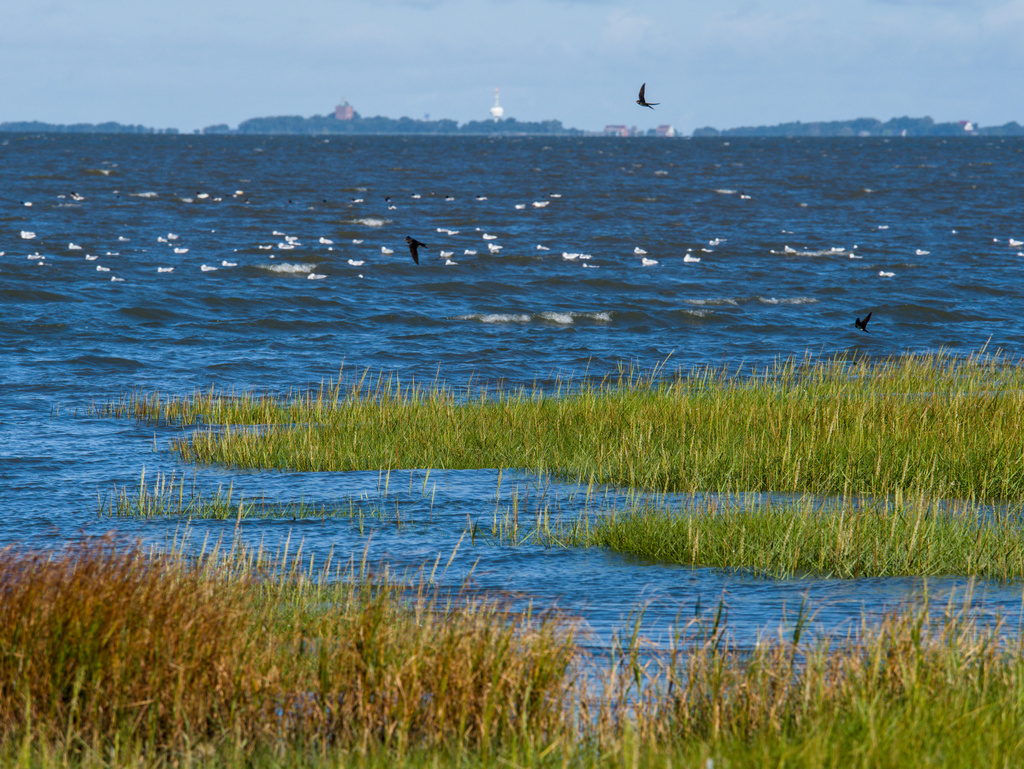
And “Walk” sounds different again – it’s the only track on this album that was recorded by the North Sea.
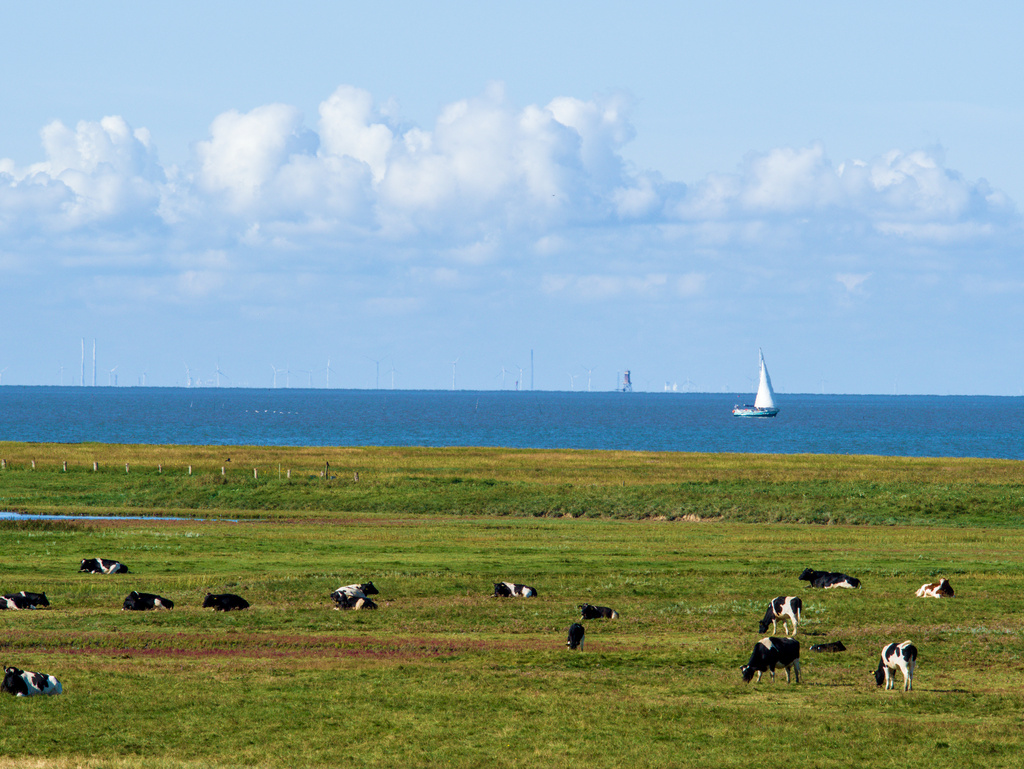
A dear friend of mine bought an old farm there two years ago to realise her dream: her own farm for her horses – and for other horses with respiratory problems, for whom the air by the North Sea is nothing short of a miracle.
I’d gone up there to lend a hand with the technical side of things and spend a few days on the North Sea coast. Once again, I’d brought a minimal setup of electronic instruments with me – a Korg Minilogue and the Behringer Pro VS Mini, which had already accompanied me to the Reinhardswald.
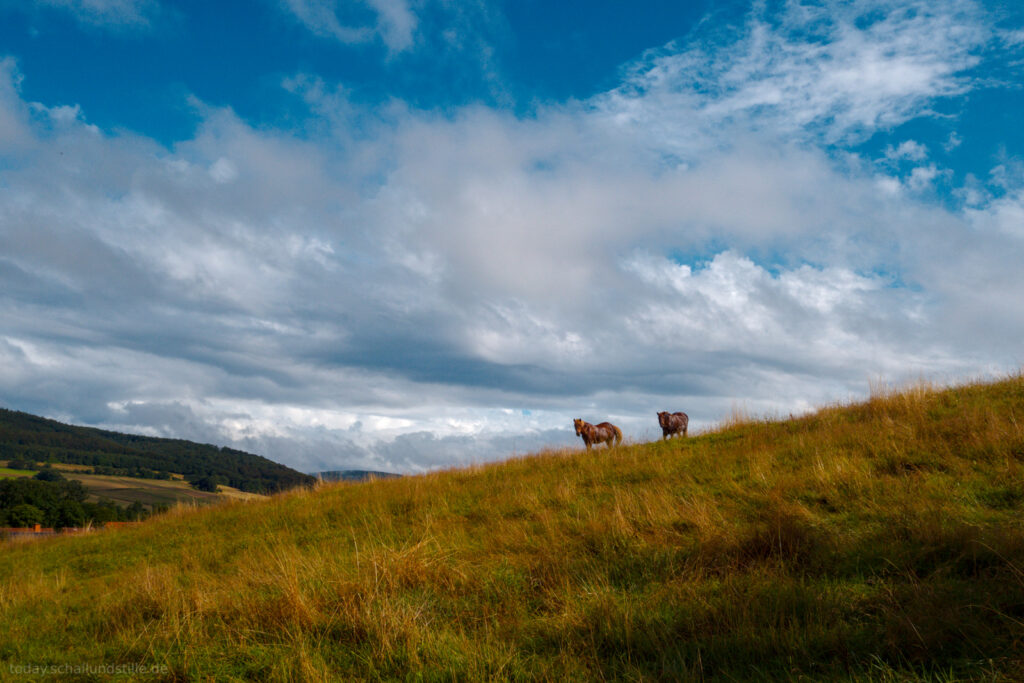
Actually, I hardly had any time to write new music – there was plenty of work to do on the farm, and even when that was done, there were still the horses. And horses have their very own, utterly irresistible way of distracting me. I can make music at home too, but walking along the dyke with a horse, listening together to the chatter of the seagulls and oystercatchers – that was something you could only do here.
But two songs did emerge nonetheless.
One of them – the first one I wrote – was a pretty intense electroclash demo called ‘A Good Day’. It was about revolution, and the fact that we desperately need one. That it’s time to actively fight back against the appalling, all-pervasive, abysmal stupidity in this world. It was more or less a call to resistance, and I left open whether it should be carried out with violence or not, because I myself was not sure about that anymore. It would be a good day to storm the palace and chase the tyrants through the city, and so on…
The next day, Charlie Kirk was murdered, and although Charlie Kirk was a thoroughly despicable person and the world is certainly no poorer for his loss, it became clear to me that I couldn’t go through with it.
So I left the music alone and took care of the farm and the horses instead.
But then, one of the following days, I went for a walk.
Before I explain why this walk was so special, I need to give a bit of background. You see, what you need to know about the Wurster North Sea coast is that it’s not particularly easy to get to either the North Sea or the coast itself. Most of the immediate coastal area consists of compensation areas for harbour construction (i.e. areas set aside for nature conservation so that nature can be heavily damaged elsewhere), which are off-limits and inhabited by cows.
There’s only one access point to the sea near the farm, and – as you’d expect in Germany – it’s lined with chips stalls, drinks stalls, a campsite, a campsite exclusively for caravanners with caravans of a specific make, a campsite exclusively for caravanners who want to be naked, a playground, another playground, a free car park, a pay-and-display car park, a tourist rip-off beach bar, a tourist information kiosk, toilets, showers, and, lest we forget: a ticket office where they check whether you’ve paid the visitor’s tax.
And it’s packed with people who want to get to the sea, who aren’t put off by all that nonsense, and who turn up in SUVs, caravans, caravans of a specific make, midlifecrisis motorbikes, and/or an entourage of whingeing brats.
In short, by the time you finally reach the water’s edge, you’ve had to dodge so many unpleasant individuals that even the sea can’t save the day.
But on my exploratory walks along the dyke a few days earlier, I’d discovered a spot further north that looked very promising for access to the sea, and where all the aforementioned ills of civilisation seemed to be absent.
Admittedly, it was quite a long way off, but if I could spot it from the dyke, then it should surely be possible to reach it with a short, pleasant stroll, or so I thought.
The distances at home in the beautiful Rhein-Westerwald Nature Park are all fairly easy for me to gauge. I’ve come to rely on certain landmarks I know well as indicators of distances I can estimate accurately.
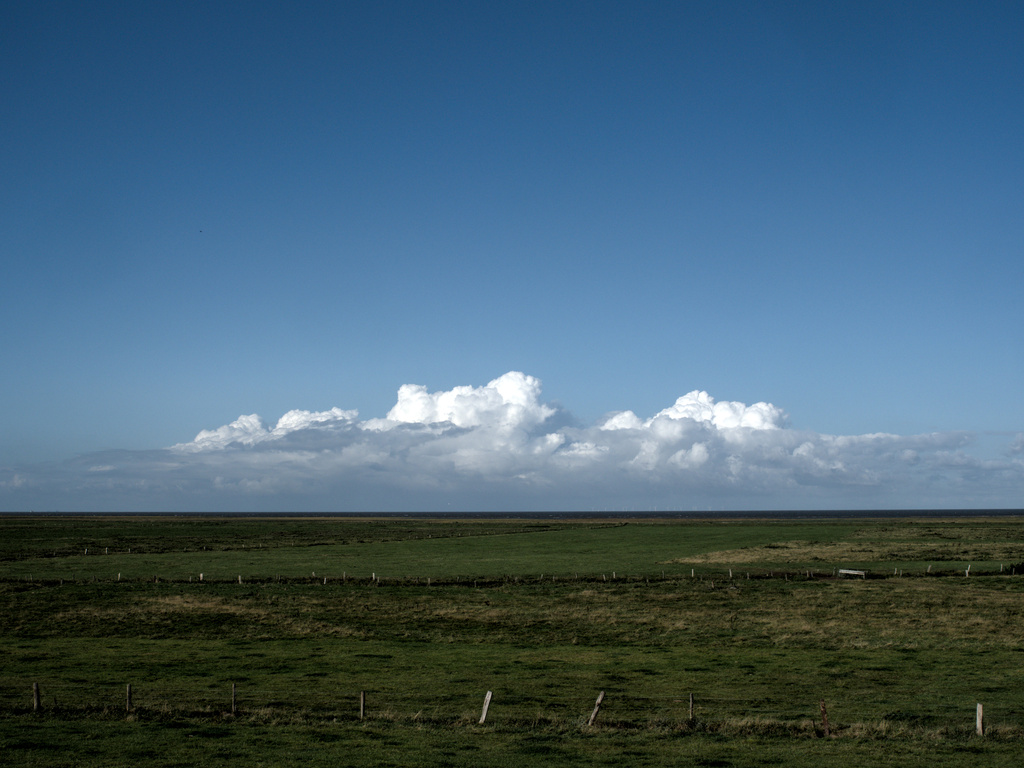
Up north, it’s slightly different; things you can make out with the naked eye are much further away than the eye is used to. And so I walked and walked and walked, but seemed to be getting closer to my destination only very gradually.
Landscape-wise, not much happened – a dam is a dam, and it is very, very long and monotonous. At some point, I was alone with my thoughts and walked on and on. There were no horses to distract me and no work on the farm. There were no annoying petrolheads and no dead-end job I had to do to afford the music and animal care; it was just me and the situation I was in back then.
And that situation was that I had a pretty clear picture of what I didn’t want – of everything that got on my nerves. The abysmal stupidity spreading all over the world, for example. The petro-masculine morons with their dick enlargements and their stupid ‘Fuck You Greta’ stickers. The rise of fascism. The way in which a technology that nobody seriously wants or needs is encroaching on every area of our lives. The list is long, and I despise everything on it with a passion.
But actually, I don’t want to be that guy.
I don’t want to despise. I want all of this to stop. And if I ever release another album, I’d like to be able to make it about the beauty in this world, and not about the jerks who are destroying it.
In fact, this is one of my most dearest wishes.
And I began to sing softly to myself: “I’m gonna walk till I don’t feel the pain any more…”
I walked on and on, and the lyrics developed further and further. It became a very personal song, about the longing to somehow leave behind those things I no longer want in my life and to find myself again.
After a total of 8 kilometres, I’d reached the seaside. And what can I say? The walk had been well worth it. Not only was it absolutely beautiful here, and the complete absence of chip shops and the like was a real treat – but I’d also hummed the first half of a new song into my mobile on the way.
The second half followed that evening, when I sat down at my instruments in ‘Haus Störtebeker’ – as my accommodation was called – utterly exhausted and with aching limbs from the 16-kilometre power march, and recorded a first, rough demo.
The following evening, I walked to the sea again late at night, but this time not 8 kilometres, but the direct route past the fishing harbour and along the now-closed chip shops. It was deserted, low tide, and the seabirds were putting on a veritable concert of the most varied sounds. I recorded their performance as best I could on my mobile phone (they can be heard in the background of the song at the point where only the drums are playing and the sound becomes increasingly muffled until it finally fades away completely; and then again, together with other seabirds, in the coda).
Soon they were all around me, the mudflats were bathed in deep late-evening blue, and it was a truly impressive, moving experience. It almost felt as though the seabirds were calling out to me, telling me I just had to listen closely and I would find my way.
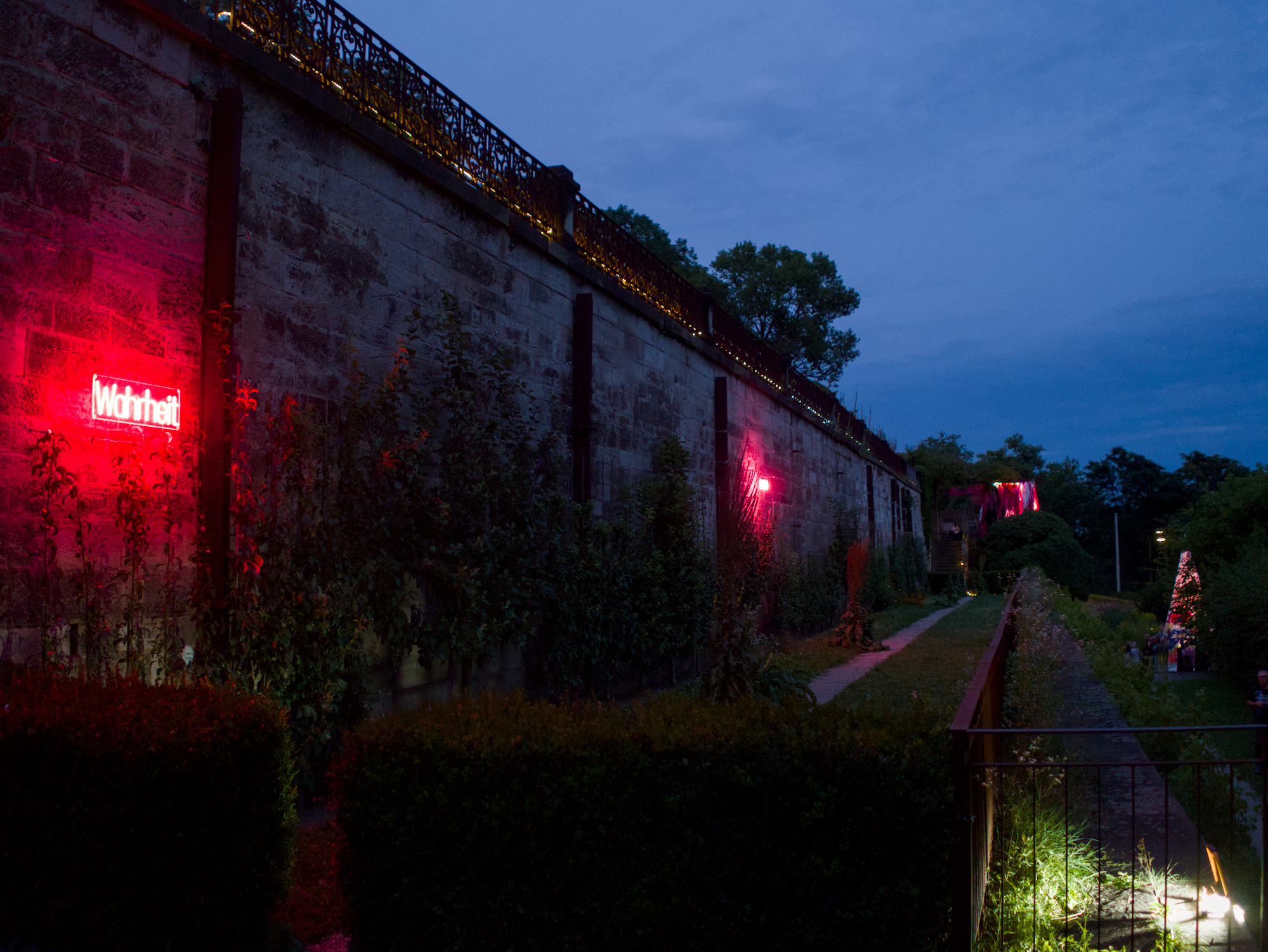
The “Weinberg” is a rather extraordinary location. It consists of limestone cliffs rising up in the middle of the city. In the 19th century, farmers from Kassel dug tunnels into the rocks to use them for storing ice.
This ice was harvested from the River Fulda during the winter months so that it could then be used to chill beer in the summer. Later, the tunnels driven into the rocks were also used for storing wine, which is mainly why the misappropriated name “Weinberg” (vineyard) is used.
The Henschel industrialist family had a lavish villa built on the Weinberg, though parts of it were demolished as early as 1931 because they could no longer afford the upkeep – that is, before they became fabulously wealthy through arms deliveries to the Nazis. But of course that was short-lived, and the Allies took care of the rest during the major attack on Kassel on 22 October 1943.
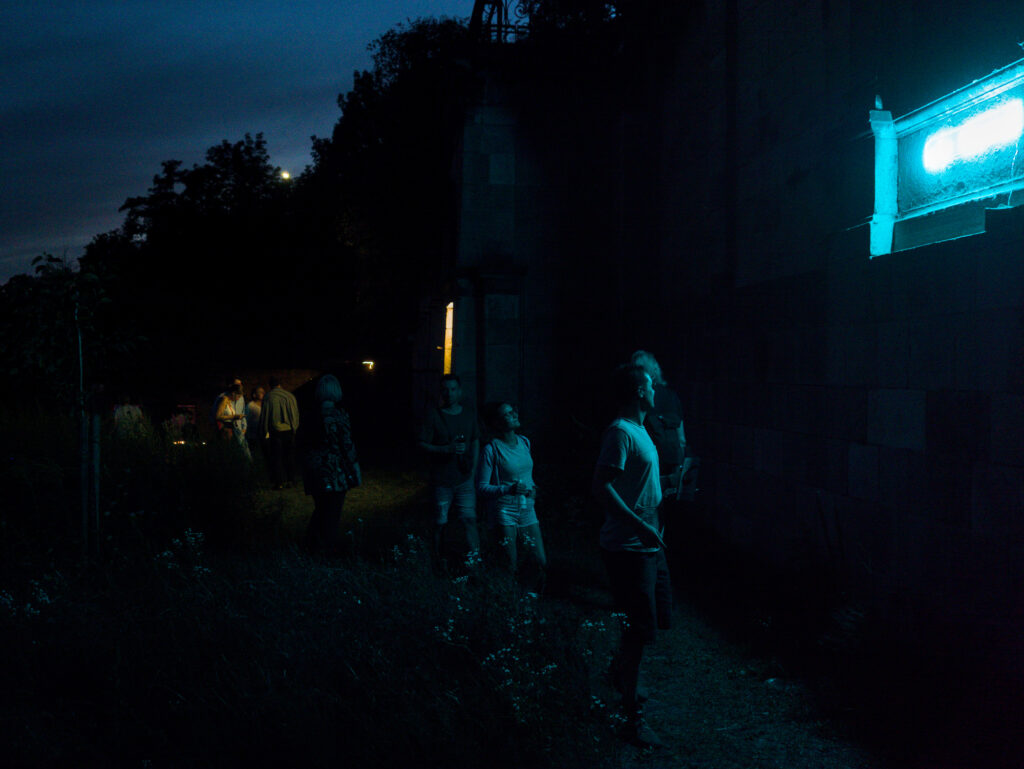
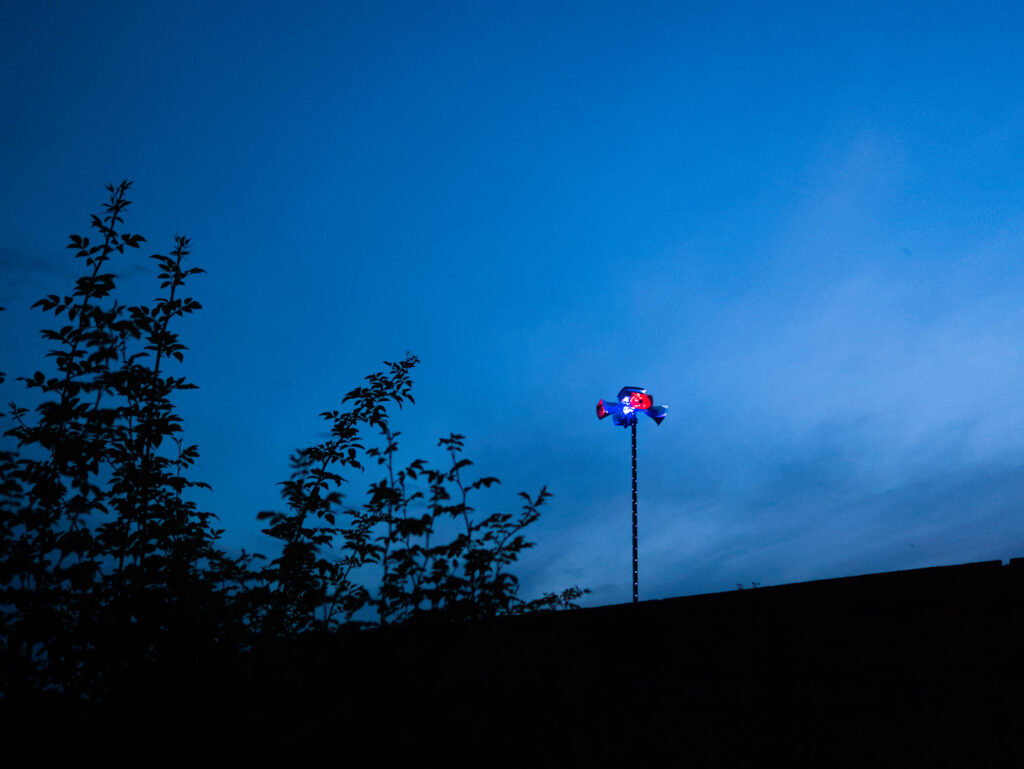
Today, the Weinberg is home to museums, memorials… and, of course, the annual “Lichtwege” festival.
So, in the summer of 2024, we were there too, and also present were the artists exhibiting their work at the “Lichtwege”, with whom one could chat about their art.
Since we’d moved away from Rhöndorf, our access to cultural events had been rather limited. So we were happy to seize this opportunity and immerse ourselves in the exciting, colourful world of shapes and sounds at the “Lichtwege” – an event that seemed a world away from the troubles we’d had to contend with back home in the village.
But the longer I walked across the vineyard terraces, and the more art I looked at and learned the stories behind it, the calmer and more pensive I became – and at first I didn’t even realise why.
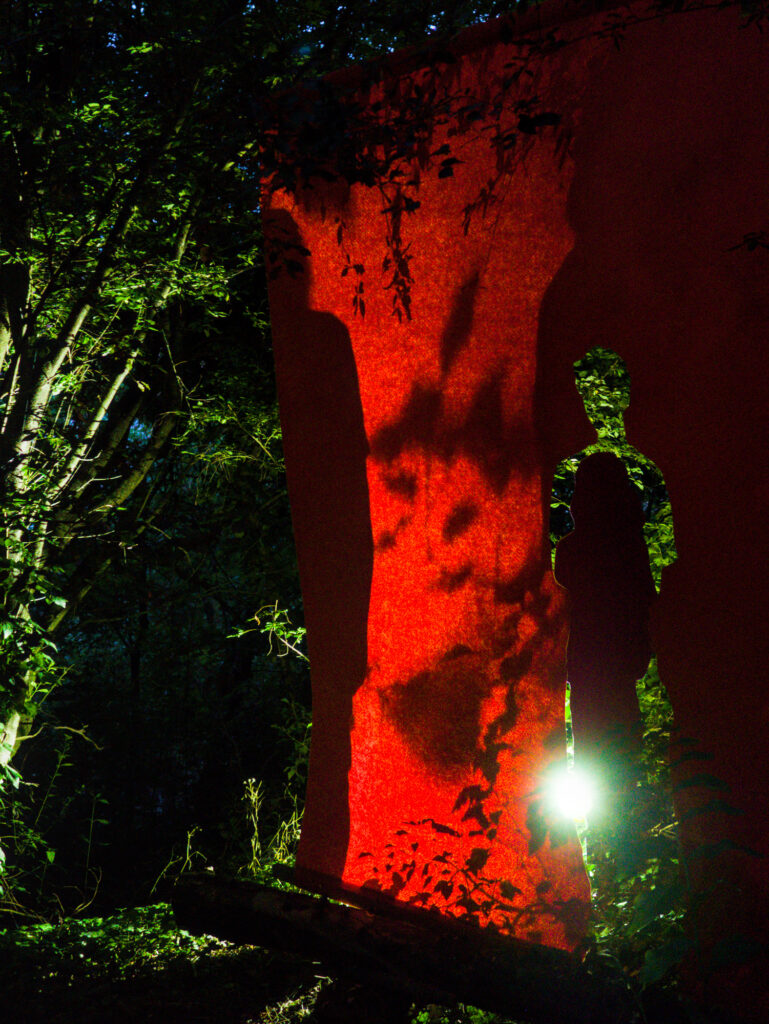
Eventually, I came across a sort of light installation with sound, and the artist behind it was just talking to her audience about how it felt for her to be an artist. How she experienced it when her art spoke to her.
And at that moment, I actually had to laugh.
Not because it seemed so ridiculous to me. I know these moments very well, when what I create takes on a life of its own and communicates with me. When a few randomly thrown-together notes and chords become so much more, when I suddenly hear something new in them, and when I feel as though my music is trying to tell me something.
So I actually understood the woman very well. That was the problem, too. This was my world, and yet it wasn’t.
I see myself as an artist
But even from the way I’m writing this, the attentive reader might notice that something isn’t quite right, and that I’m struggling with it.
So, let’s try again.
I am an artist.
That’s better. I am an artist. But it really is hard for me to say that. And what actually happened back then at the Weinberg in Kassel was this: I looked with great, great envy at this woman who was just talking so effortlessly about herself and her art, and I let out a bitter little laugh because I’m not like that.
Because as she was talking about it – about what a powerful feeling it is when art talks to you – I imagined what would happen if I were to say something like that back home in my village.
Most people would just look at me in bewilderment and later whisper amongst themselves: “Huh? What does he think he is? An artist? And what’s he going to live on then? On benefits, no doubt. Yeah.”
And with many of my friends, colleagues and acquaintances, it’s exactly the same. To them, this Stephan simply doesn’t exist.
I’ve avoided calling myself an artist my whole life; first because I wasn’t sure I was one, and later because the people around me simply don’t know me that way. I’m a volunteer animal keeper, a software developer, an amateur photographer… but what I express from the depths of my soul has always been music.
That became clear to me at that moment in the vineyard. And when the artist received applause and chatted animatedly with those around her, I felt how much I miss some kind of exchange, and that I had to find a new way of dealing with my identity as an artist.
When we saw the aftermath of the flood in the Weser Valley two days later, I hadn’t yet realised just how much the flood would ultimately shape the whole album (my voice therapist Katja and I once joked that the album really should have been called ‘Floodland’ – but I suspect a certain Mr Eldritch would have had something to say about that).
I now know that the flood is so much more than just water.
The flood is parents driving their children 50 metres to nursery in an SUV. Lost souls who are proud of being stupid. Software that encourages lonely teenagers to put a bullet through their heads. The flood is bad news, outrage, cynicism, manipulation, and the constant feeling that everything is still getting a little worse. The flood is Spotify, TikTok and YouTube. Algorithms that determine what is visible and what isn’t. Culture that is now called ‘content’ and only has value if it can be monetised.
But then there is that wonderful moment when art talks to you, through the silence, and when the flood cannot touch you.
I can’t blame my friends, colleagues and acquaintances for not being interested in my music.
But I can blame myself if I let that make me feel small, hide away, deny who I am and feel miserable about it, because that is exactly the kind of surrender the flood wants from me.
Well – not with me, dear flood.
I am an artist. Deal with it.
Epilogue
On the evening of 7 March 2026, our beloved dog Buba left us forever.
She did not suffer, but her passing came as a great shock to us and we are still finding it very difficult to come to terms with this new reality.
Buba was our faithful companion for 14 years.
2015
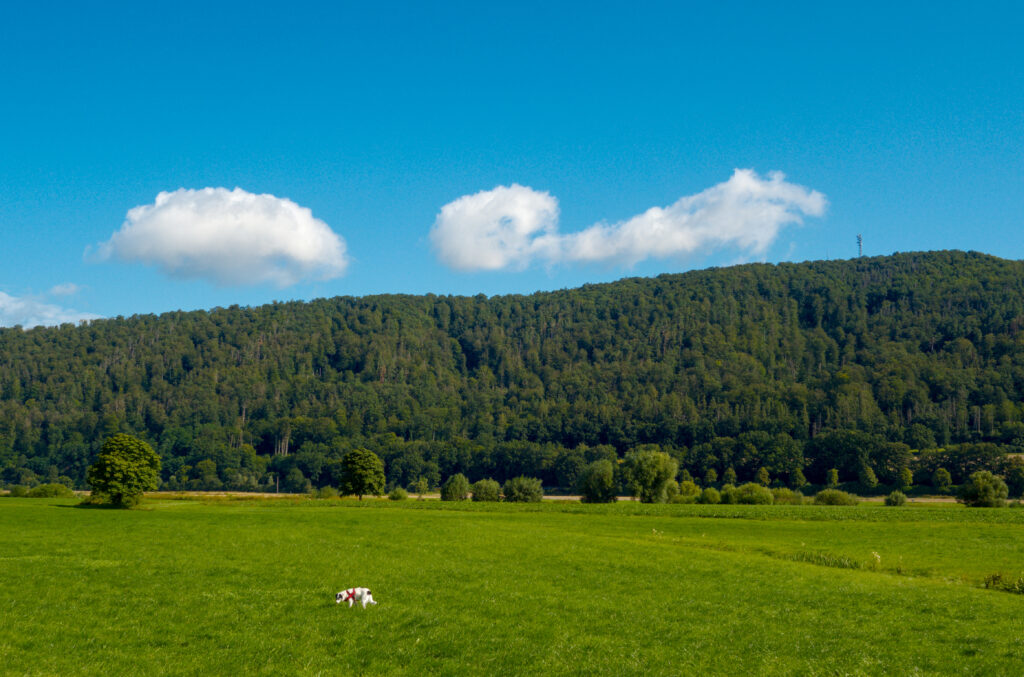
She was with us when Botany Bay still existed, and she was there when I founded Schall und Stille. She was there when my mother died, and she was there when Katja’s mother died. Together with her, we explored the Reinhardswald and the Weser Valley. Together we welcomed Candor K. into our lives, and Buba was the best pack sister he could have hoped for. And she comforted us after Candor had left us.
And of course she was there when ‘Trendula’, ‘Niar’ and ‘The Artist In The Vineyard’ came into being.
She was always with us, through all the highs and all the lows.
Only those who have ever been able to call a dog their friend can imagine our grief, which is no less deeply felt and painful than if a human had passed away.
2026
Shortly after Buba’s death, we received news that there had been a smouldering fire at the Hundehaus (our friend’s wooden cabin) at the foot of the Reinhardswald.
The fire had rendered the building uninhabitable and caused such severe damage that it is likely beyond repair.
So, along with Buba and the Hundehaus, our time at the foot of the Reinhardswald also comes to an end – all the adventures we experienced there, and the music that was created there.
When I was at the Hundehaus with Buba for the recordings that would eventually become the three songs on ‘Strategies…’, I also recorded a total of nine other demos that didn’t make it onto the album.
The music for Buba’s song was conceived at the Hundehaus, but I couldn’t think of any lyrics; then, as “Strategies” finally took shape, it became clear that a song about my dog wouldn’t necessarily fit the album’s theme, and so the idea was shelved.
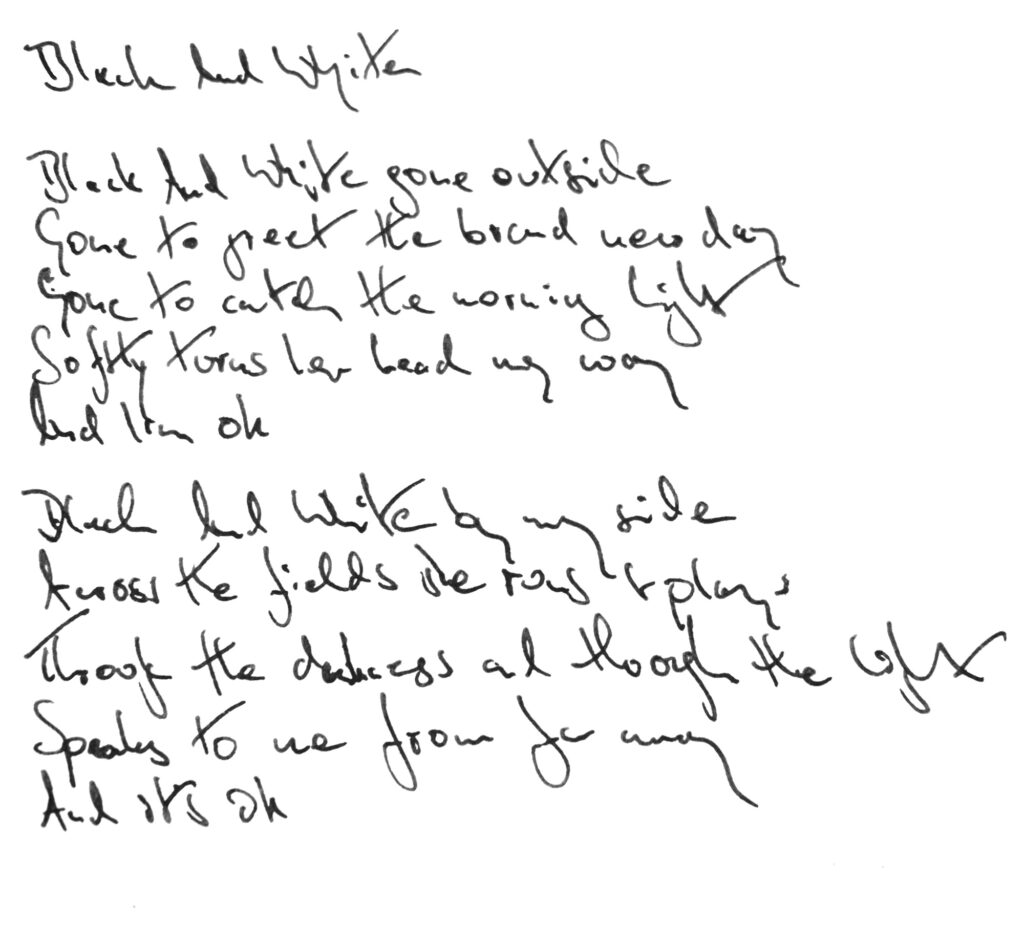
After Buba’s death, lyrics came to me very quickly, and I finished the song.
Here it is.
“Black And White” – track eleven of “Strategies Against Algorithms”
The solo instrument right at the end is a kantele – a Finnish musical instrument that used to be part of the cabin’s furnishings. It can also be heard in the coda of “The Artist In The Vineyard”, and it, too, is no longer with us.
From my perspective today, it’s nonsense that a song about Buba wouldn’t have fit on the album. It would have fitted very well, and she would have deserved it.
And that’s why today I’d like to dedicate not just this one, final track to her, but the whole album. She was always there, from start to finish.