

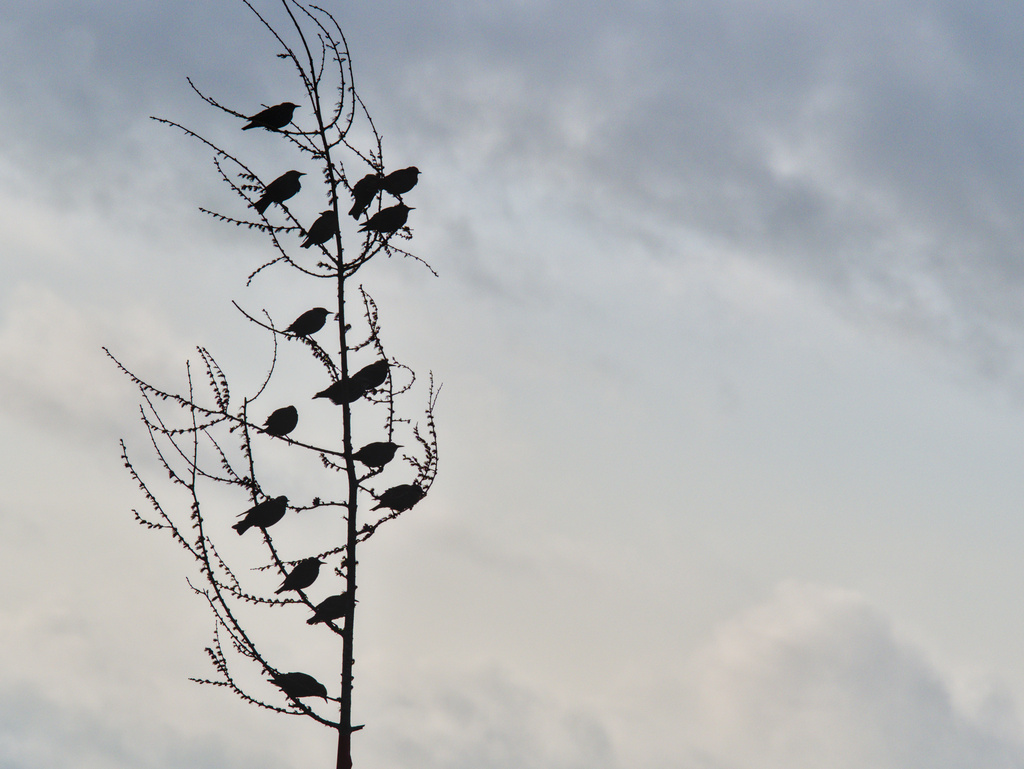
I often find it fascinating just how much the location where music is created influences the sound. For me, for example, the three tracks I recorded at the “Hundehaus am Reinhardswald” sound completely different from what I’ve done at home.
And “Walk” sounds different again – it’s the only track on this album that was recorded by the North Sea.
A dear friend of mine bought an old farm there two years ago to realise her dream: her own farm for her horses – and for other horses with respiratory problems, for whom the air by the North Sea is nothing short of a miracle.
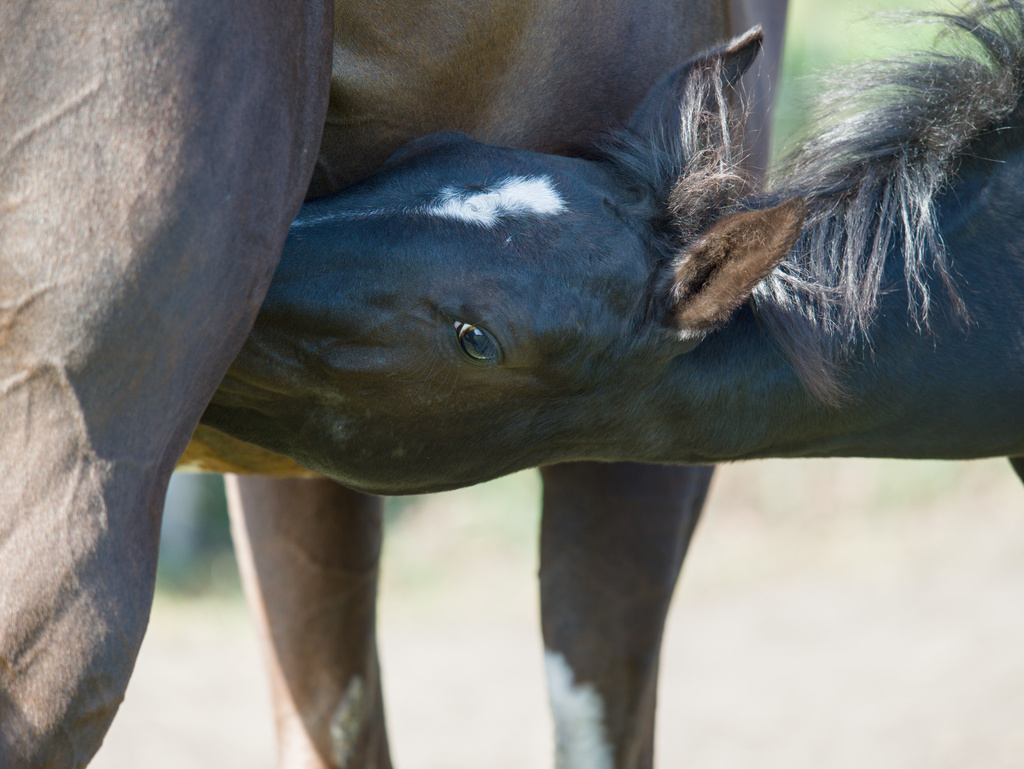
I’d gone up there to lend a hand with the technical side of things and spend a few days on the North Sea coast. Once again, I’d brought a minimal setup of electronic instruments with me – a Korg Minilogue and the Behringer Pro VS Mini, which had already accompanied me to the Reinhardswald.
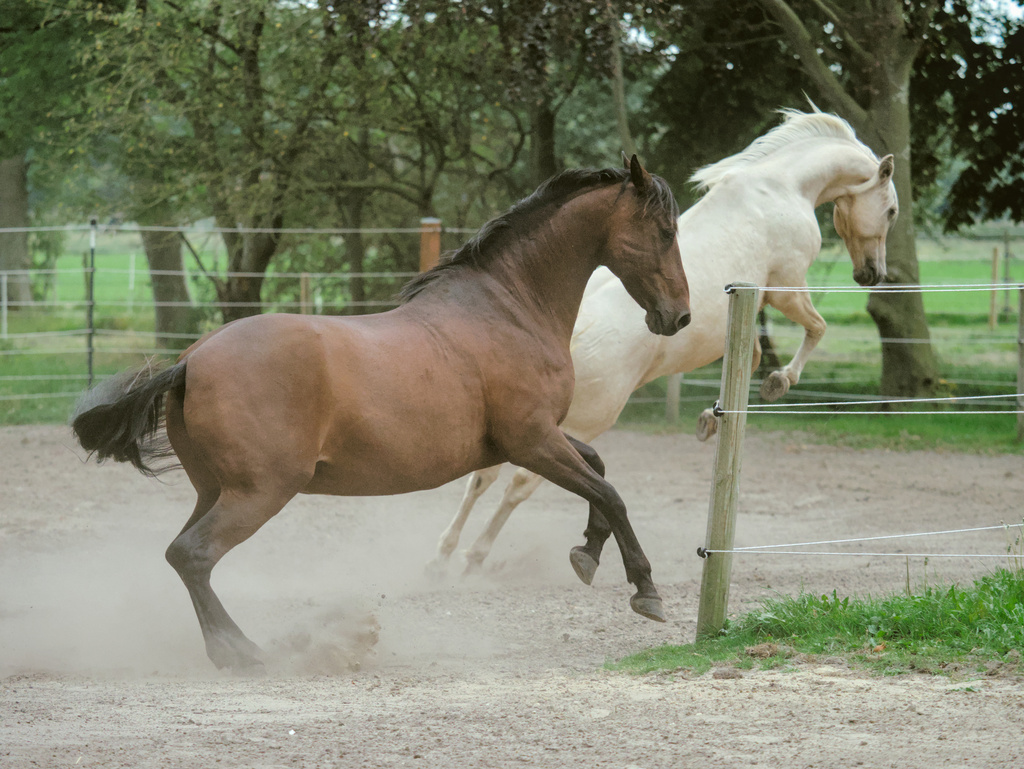
Actually, I hardly had any time to write new music – there was plenty of work to do on the farm, and even when that was done, there were still the horses. And horses have their very own, utterly irresistible way of distracting me. I can make music at home too, but walking along the dyke with a horse, listening together to the chatter of the seagulls and oystercatchers – that was something you could only do here.
But two songs did emerge nonetheless.
One of them – the first one I wrote – was a pretty intense electroclash demo called ‘A Good Day’. It was about revolution, and the fact that we desperately need one. That it’s time to actively fight back against the appalling, all-pervasive, abysmal stupidity in this world. It was more or less a call to resistance, and I left open whether it should be carried out with violence or not, because I myself was not sure about that anymore. It would be a good day to storm the palace and chase the tyrants through the city, and so on…
The next day, Charlie Kirk was murdered, and although Charlie Kirk was a thoroughly despicable person and the world is certainly no poorer for his loss, it became clear to me that I couldn’t go through with it.
So I left the music alone and took care of the farm and the horses instead.
But then, one of the following days, I went for a walk.
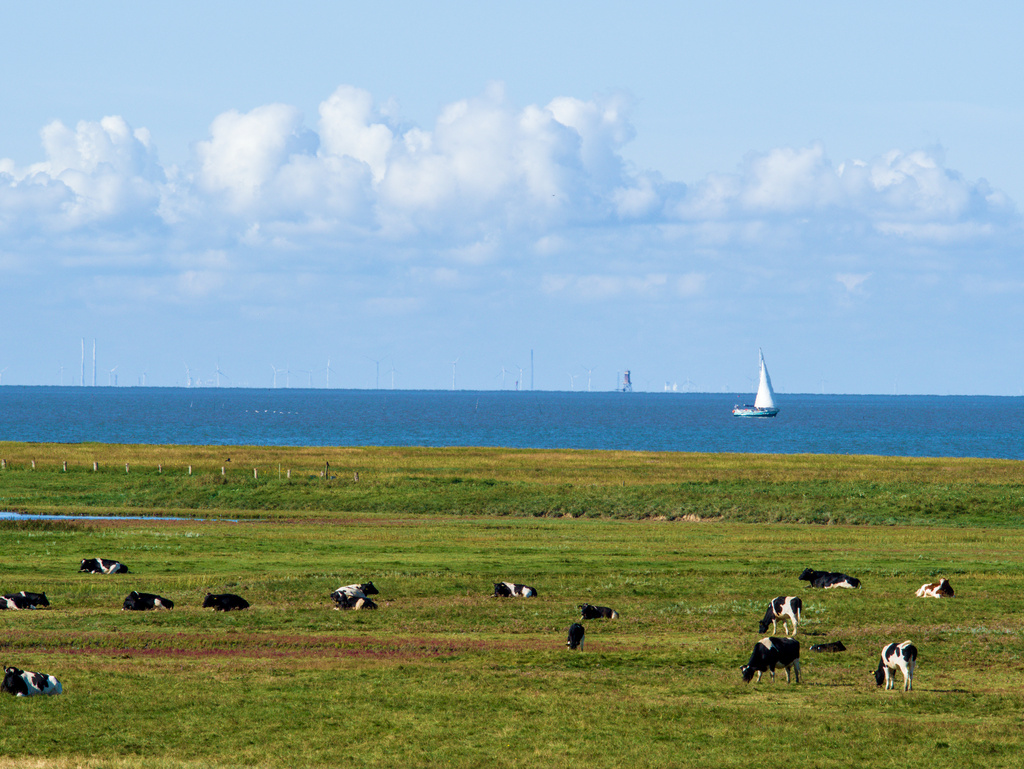
Before I explain why this walk was so special, I need to give a bit of background. You see, what you need to know about the Wurster North Sea coast is that it’s not particularly easy to get to either the North Sea or the coast itself. Most of the immediate coastal area consists of compensation areas for harbour construction (i.e. areas set aside for nature conservation so that nature can be heavily damaged elsewhere), which are off-limits and inhabited by cows.
There’s only one access point to the sea near the farm, and – as you’d expect in Germany – it’s lined with chips stalls, drinks stalls, a campsite, a campsite exclusively for caravanners with caravans of a specific make, a campsite exclusively for caravanners who want to be naked, a playground, another playground, a free car park, a pay-and-display car park, a tourist rip-off beach bar, a tourist information kiosk, toilets, showers, and, lest we forget: a ticket office where they check whether you’ve paid the visitor’s tax.
And it’s packed with people who want to get to the sea, who aren’t put off by all that nonsense, and who turn up in SUVs, caravans, caravans of a specific make, midlifecrisis motorbikes, and/or an entourage of whingeing brats.

In short, by the time you finally reach the water’s edge, you’ve had to dodge so many unpleasant individuals that even the sea can’t save the day.
But on my exploratory walks along the dyke a few days earlier, I’d discovered a spot further north that looked very promising for access to the sea, and where all the aforementioned ills of civilisation seemed to be absent.
Admittedly, it was quite a long way off, but if I could spot it from the dyke, then it should surely be possible to reach it with a short, pleasant stroll, or so I thought.
The distances at home in the beautiful Rhein-Westerwald Nature Park are all fairly easy for me to gauge. I’ve come to rely on certain landmarks I know well as indicators of distances I can estimate accurately.
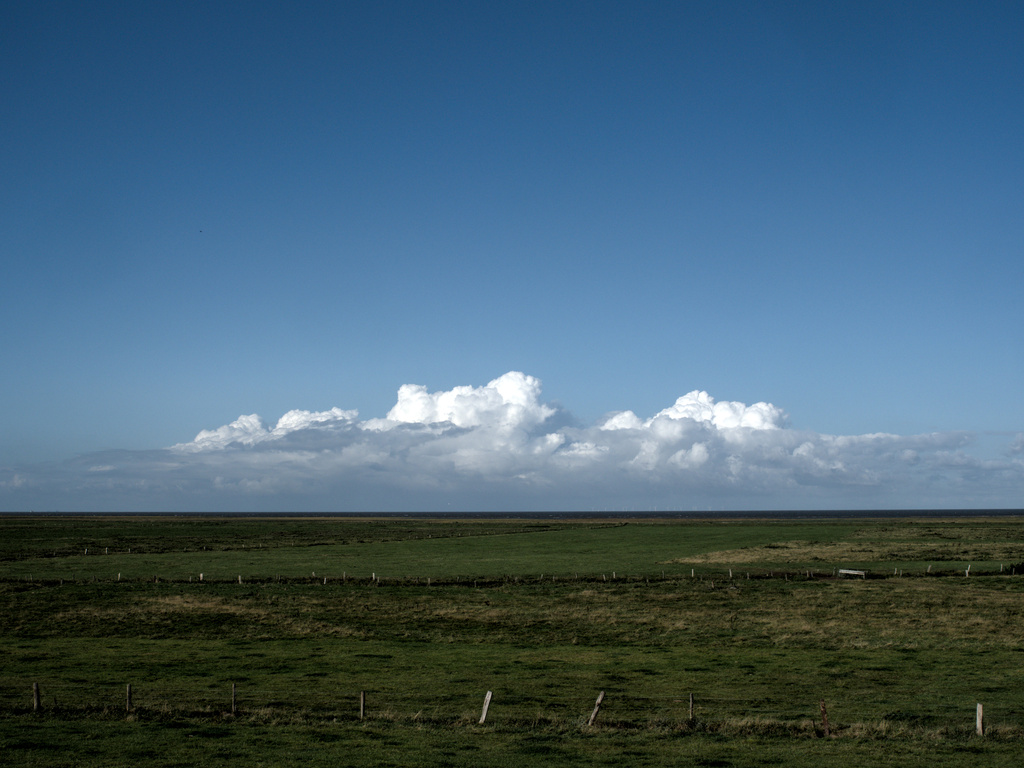
Up north, it’s slightly different; things you can make out with the naked eye are much further away than the eye is used to. And so I walked and walked and walked, but seemed to be getting closer to my destination only very gradually.
Landscape-wise, not much happened – a dam is a dam, and it is very, very long and monotonous. At some point, I was alone with my thoughts and walked on and on. There were no horses to distract me and no work on the farm. There were no annoying petrolheads and no dead-end job I had to do to afford the music and animal care; it was just me and the situation I was in back then.
And that situation was that I had a pretty clear picture of what I didn’t want – of everything that got on my nerves. The abysmal stupidity spreading all over the world, for example. The petro-masculine morons with their dick enlargements and their stupid ‘Fuck You Greta’ stickers. The rise of fascism. The way in which a technology that nobody seriously wants or needs is encroaching on every area of our lives. The list is long, and I despise everything on it with a passion.
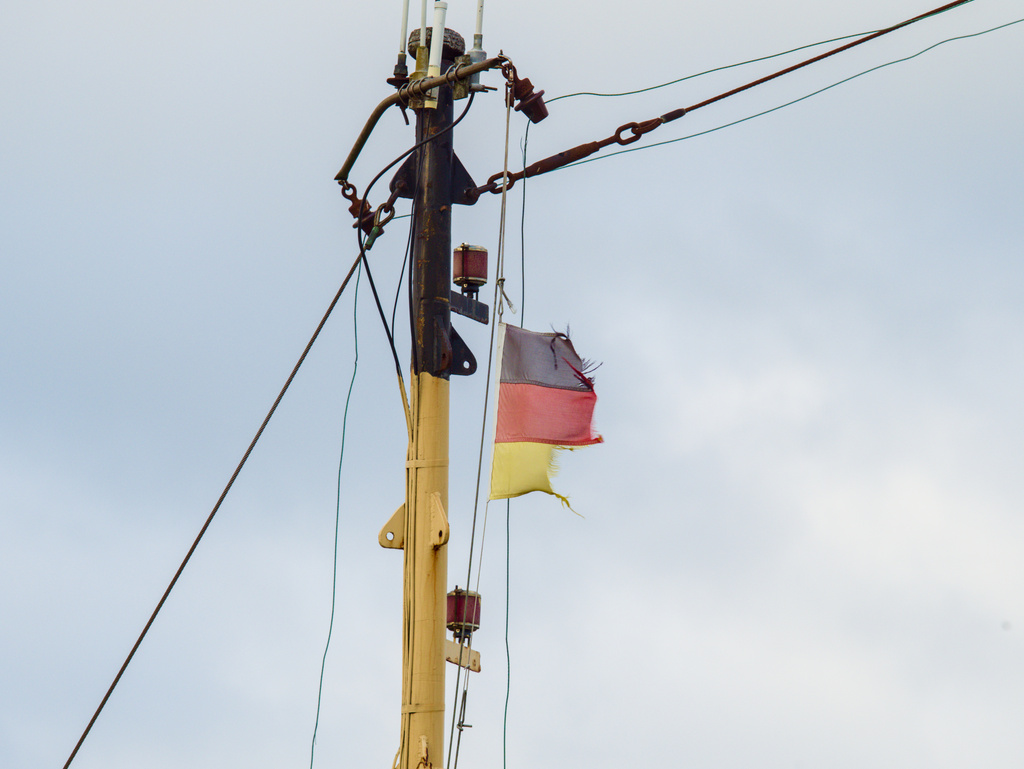
But actually, I don’t want to be that guy.
I don’t want to despise. I want all of this to stop. And if I ever release another album, I’d like to be able to make it about the beauty in this world, and not about the jerks who are destroying it.
In fact, this is one of my most dearest wishes.
And I began to sing softly to myself: “I’m gonna walk till I don’t feel the pain any more…”
I walked on and on, and the lyrics developed further and further. It became a very personal song, about the longing to somehow leave behind those things I no longer want in my life and to find myself again.
After a total of 8 kilometres, I’d reached the seaside. And what can I say? The walk had been well worth it. Not only was it absolutely beautiful here, and the complete absence of chip shops and the like was a real treat – but I’d also hummed the first half of a new song into my mobile on the way.
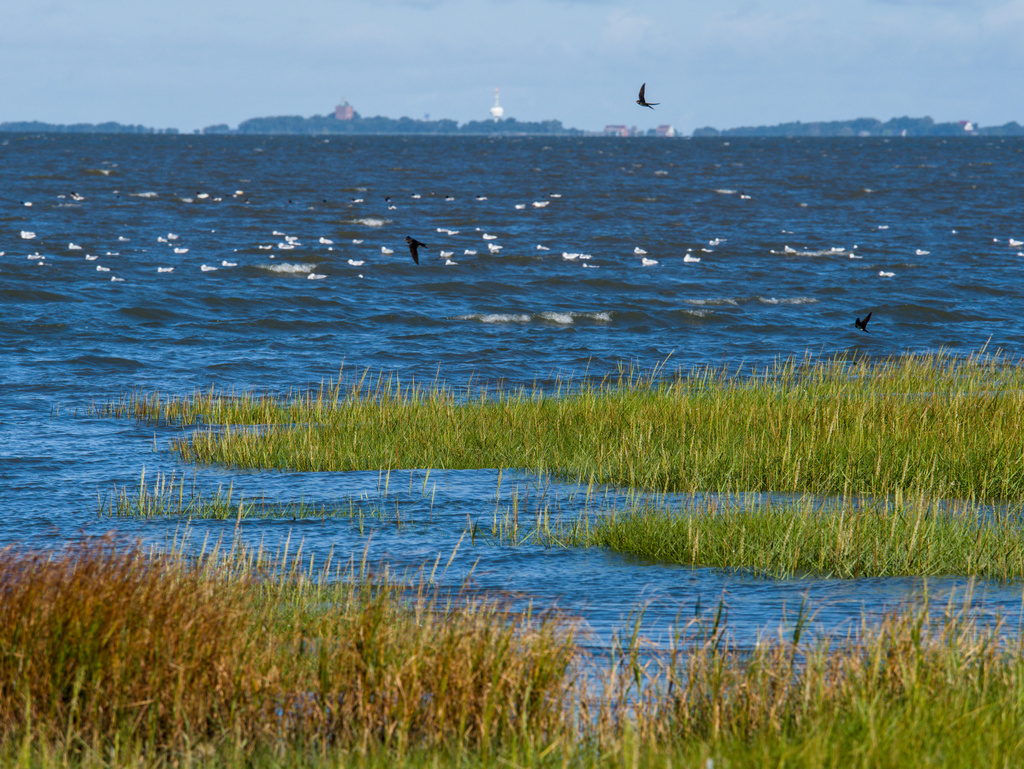
The second half followed that evening, when I sat down at my instruments in ‘Haus Störtebeker’ – as my accommodation was called – utterly exhausted and with aching limbs from the 16-kilometre power march, and recorded a first, rough demo.
The following evening, I walked to the sea again late at night, but this time not 8 kilometres, but the direct route past the fishing harbour and along the now-closed chip shops. It was deserted, low tide, and the seabirds were putting on a veritable concert of the most varied sounds. I recorded their performance as best I could on my mobile phone (they can be heard in the background of the song at the point where only the drums are playing and the sound becomes increasingly muffled until it finally fades away completely; and then again, together with other seabirds, in the coda).
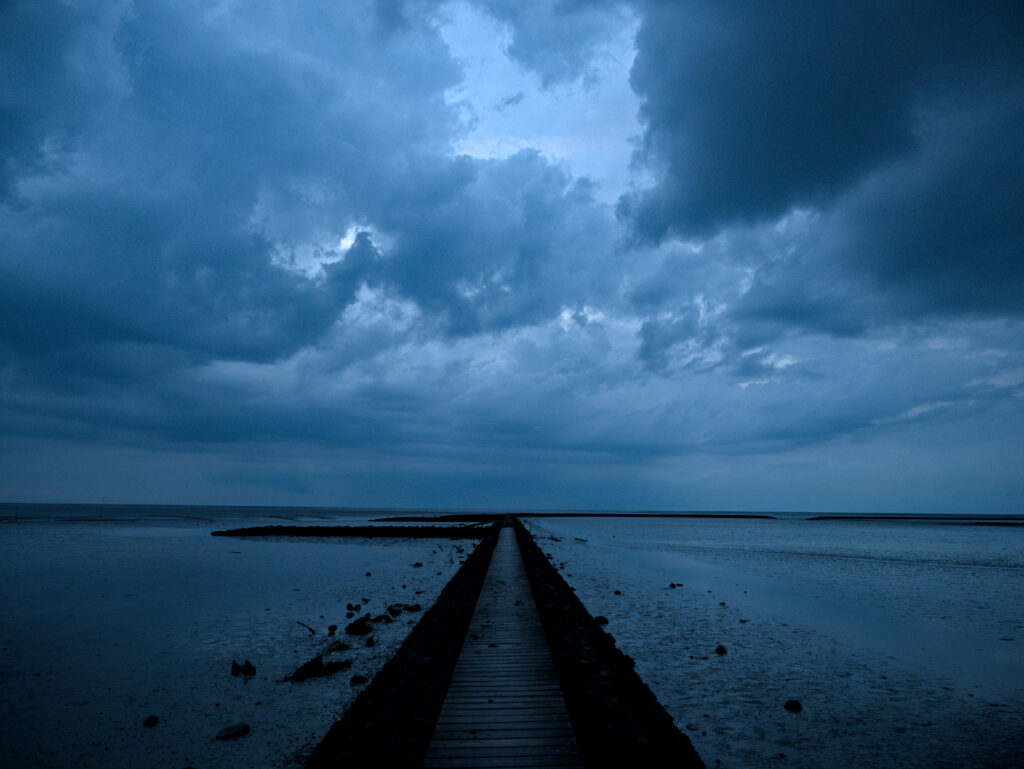
Soon they were all around me, the mudflats were bathed in deep late-evening blue, and it was a truly impressive, moving experience. It almost felt as though the seabirds were calling out to me, telling me I just had to listen closely and I would find my way.
I truly hope that day will come eventually.
Leave a Reply