

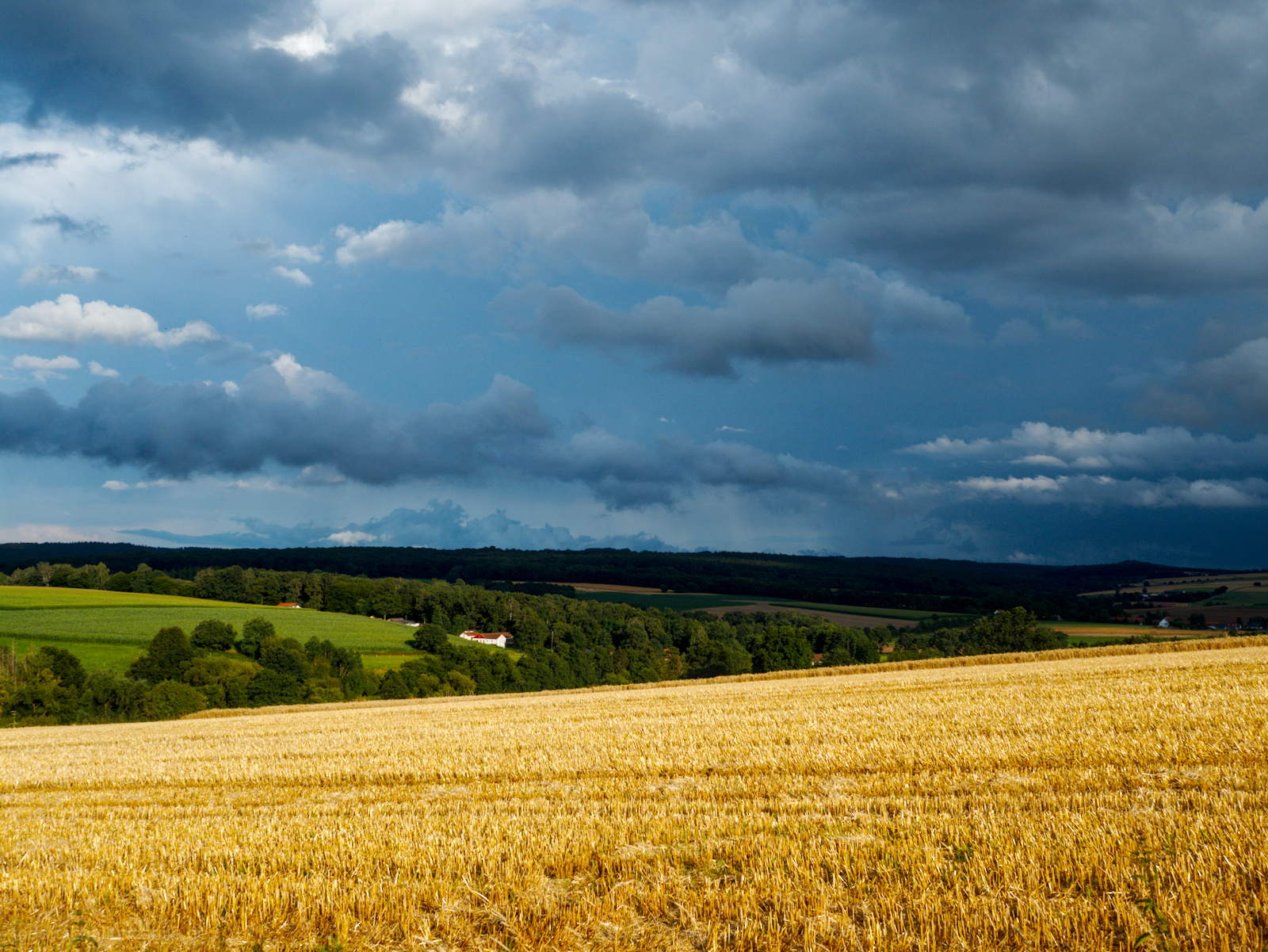
Trendula, the sadistic, relentless giantess.
Trendula, who tormented people for fun and even strangled her own sister.
Trendula, who was finally struck dead by lightning during a violent storm because God could no longer stand by and watch.
Depending on who you ask, this or something like this is how the legend of the three giant sisters – Trendula, Brama, and Saba – is told in the Weser Valley.
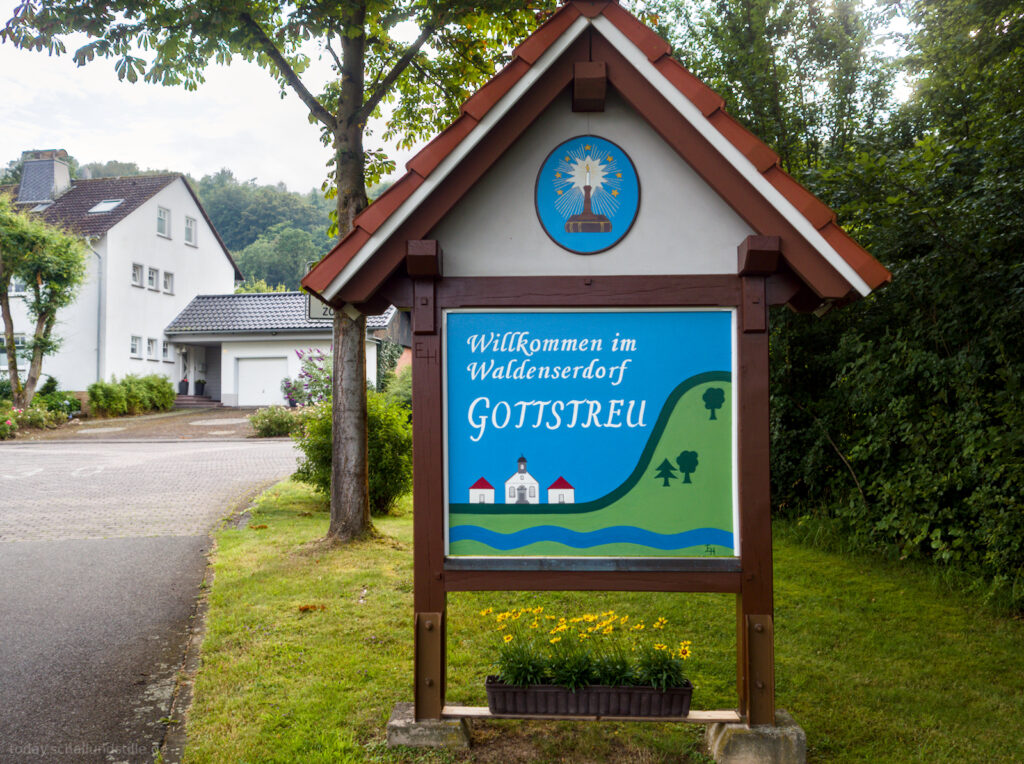
And it’s in this very Weser Valley that I spent two weeks in the summer of 2024, gathering new inspiration and recording a few new demos.
Friends of ours own a small wooden house there at the foot of the Reinhardswald in Gottstreu (the “Hundehaus am Reinhardswald”), which they love to rent out to lovely people with dogs—and so, at the end of July 2024, I set off for beautiful Gottstreu on the Weser with the world’s best co-producer dog, Buba, and a minimal setup of synthesizers.
I look back on those two weeks with great fondness, because it wasn’t just a wonderful time with Buba (whom we had to let go very unexpectedly in March 2026, and whom I miss terribly), but it was also an immensely creative and inspiring time. I recorded a total of 12 new demos in the Weser Valley, three of which (“Trendula,” “Niar,” and “The Artist In The Vineyard”) found their way onto “Strategies Against Algorithms” in forms ranging from more to less polished.
I rarely plan my music. Most of the time, I sit down at my instruments and just see what happens – what my music tells me. Different surroundings and different impressions influence what it tells me, and this time was no exception – very clearly, in fact, in a way I hadn’t anticipated, and which would ultimately have a decisive impact on this album and my journey with it.
But first things first.
On the day I arrived in the Weser Valley, the weather had already been quite unusual. Terribly oppressively humid and hot at the same time. But it didn’t really seem like it was going to rain – not all week.
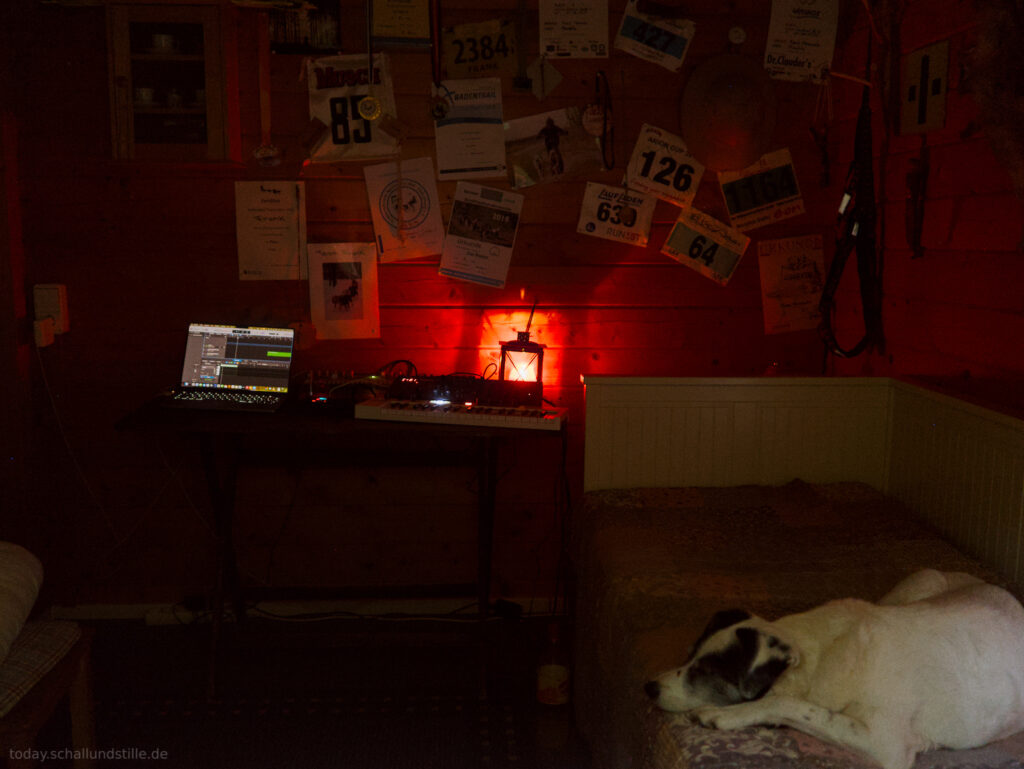
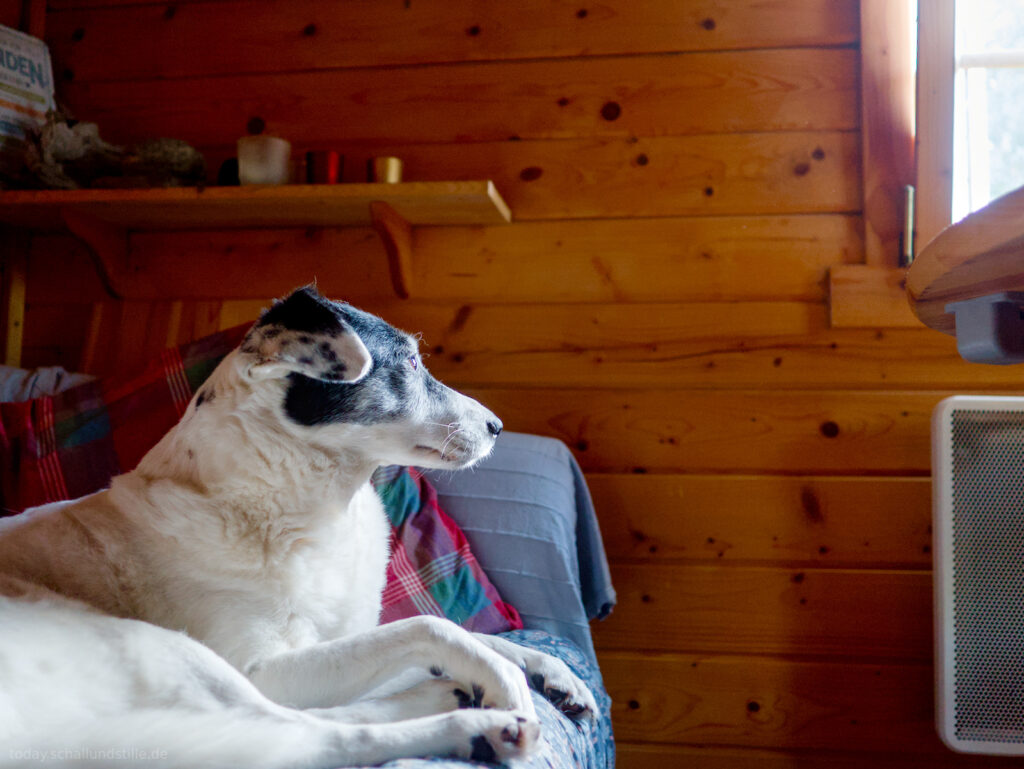
I settled in with Buba, set up my mini-studio in Buba’s bedroom (the room where her favorite couch stood), and decided to go out for a bit first.
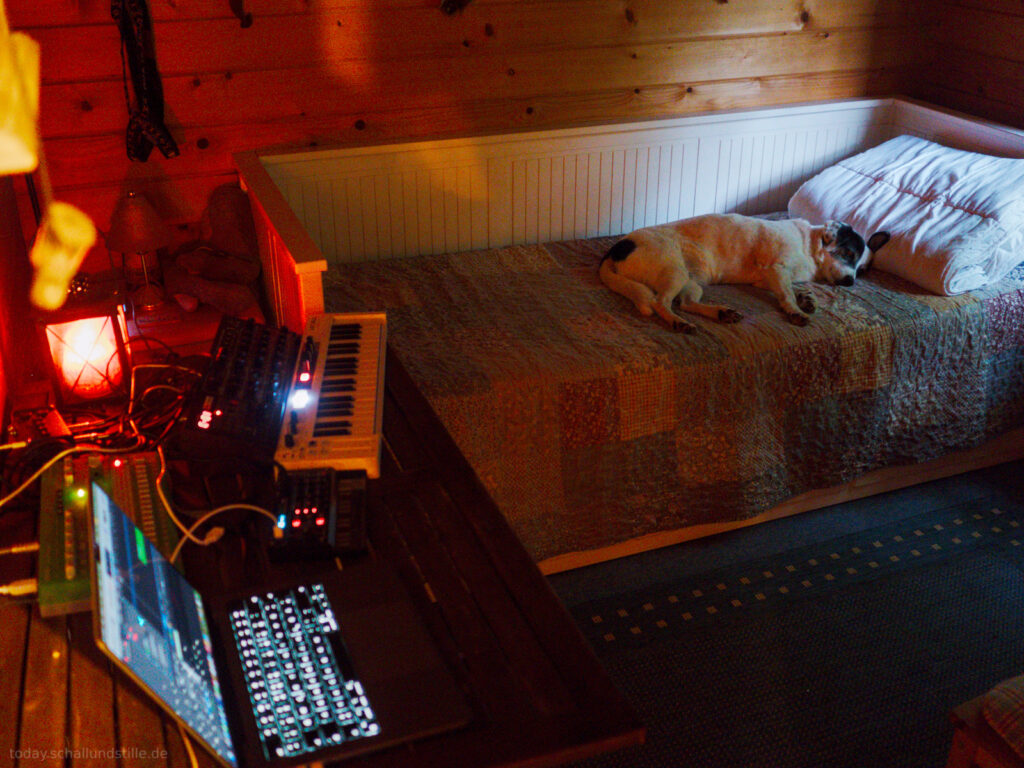
I asked Buba if she wanted to come along, but by then Buba had become a rather laid-back old dog, and she was perfectly content with her sofa. So I set off on my own to explore the area a bit—preferably places we hadn’t yet visited during our many trips over the past few years.
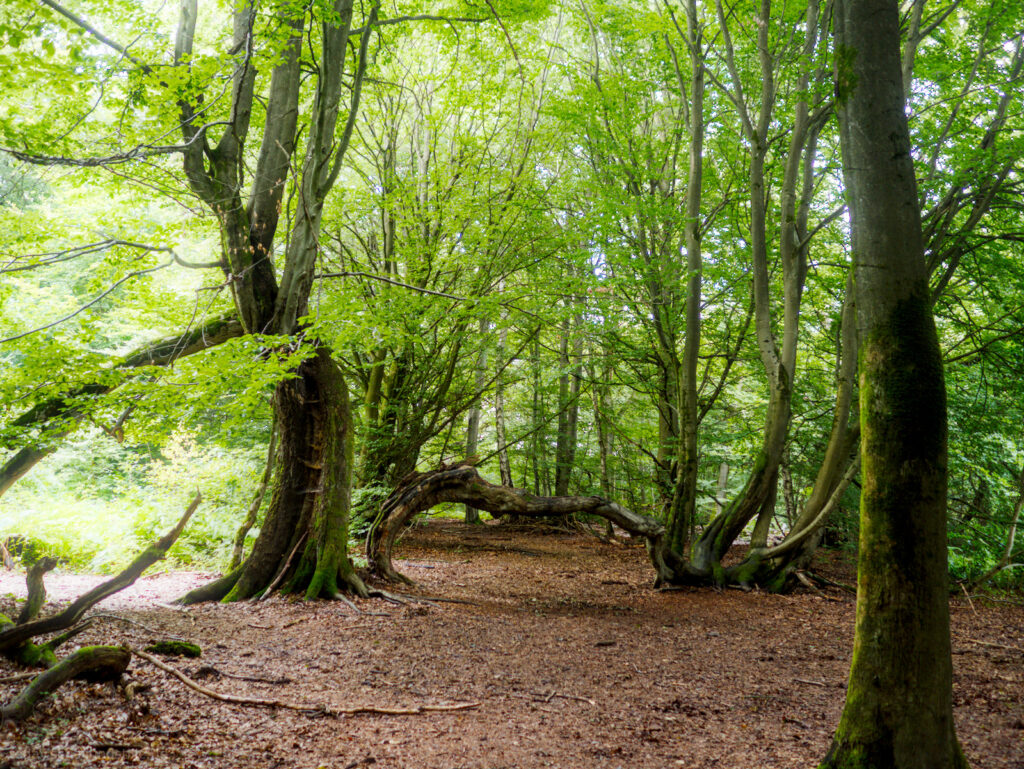
This quest eventually led me to the “Große Wolkenbruch” (the “great deluge”) – a water-filled sinkhole created by landslides –and the very spot where, according to legend, Trendula was struck by lightning.
As I mentioned, it was hot. Terribly hot and oppressive. So hot and oppressive that I was completely drenched in sweat by the time I got back to the doghouse.
I fired up my gear, played around a bit with the drum machine and synthesizers, and pretty quickly the basic rhythm pattern for “Trendula” emerged, along with the synth figure at the beginning (which, as Andrea discovered, was totally ripped off from “Malers Hüs”, which I was also working on in 2024), and I recorded some rough demo vocals.
Influenced by the relentless humidity, the general state of world politics, and the fact that I was really glad to be away from home –where the gas-guzzling youth were once again relentlessly screeching their motorbikes and belching out their sports exhausts (more on that in “Motor Song”)– and under the influence of the Trendula saga, I cobbled together some rough placeholder lyrics that mostly consisted of “Take it away, take it away.” I wasn’t sure yet where the song was headed, but the next two weeks would tell.
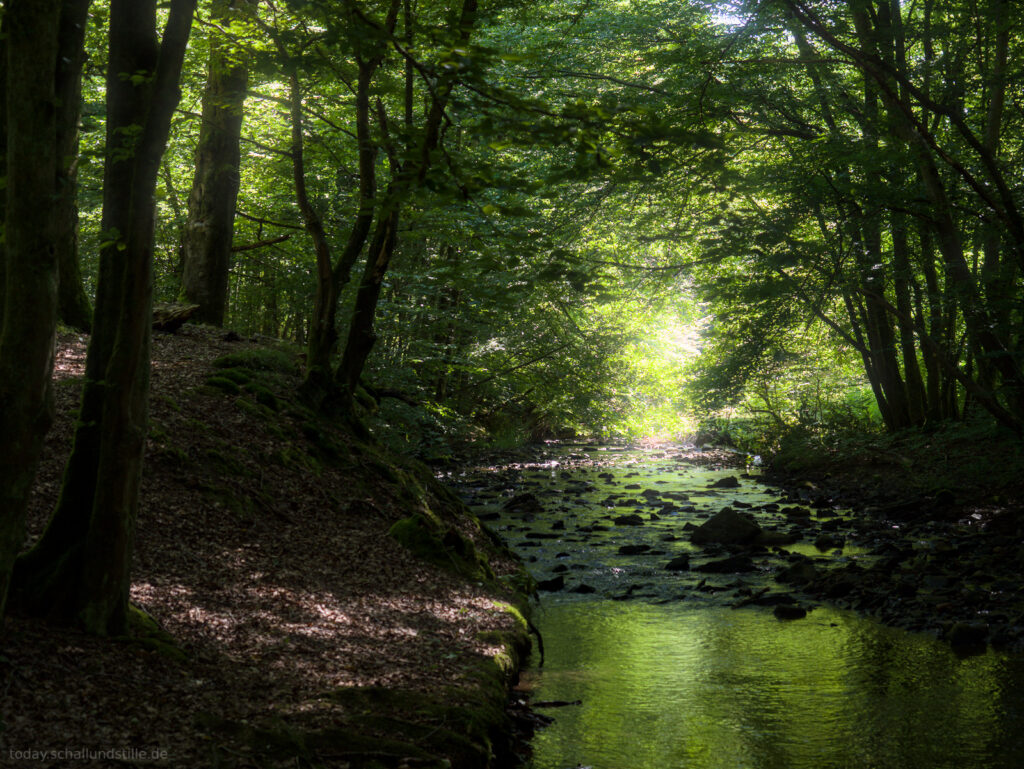
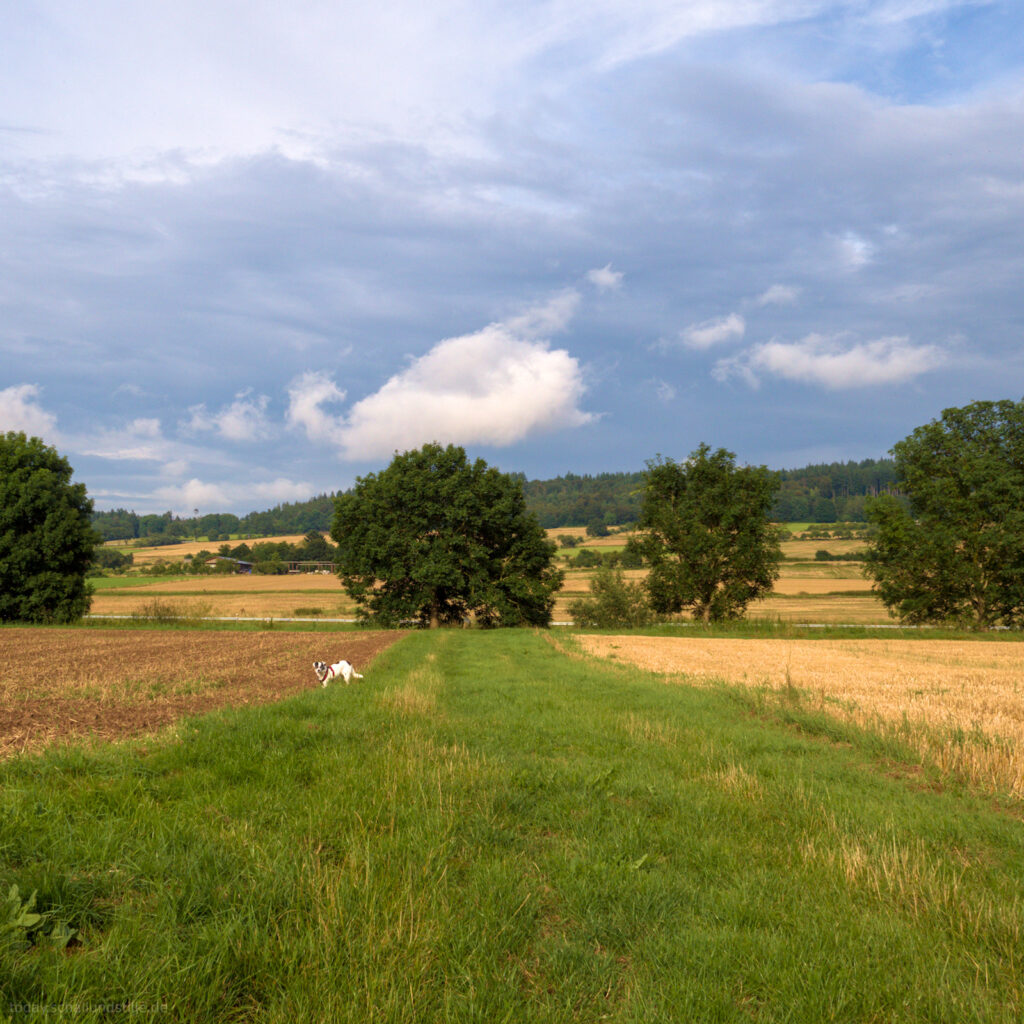
The days went by and I recorded more demos, went on exploratory walks with my Pen-F, jotted down my thoughts here and there, and had a wonderful time with Buba.
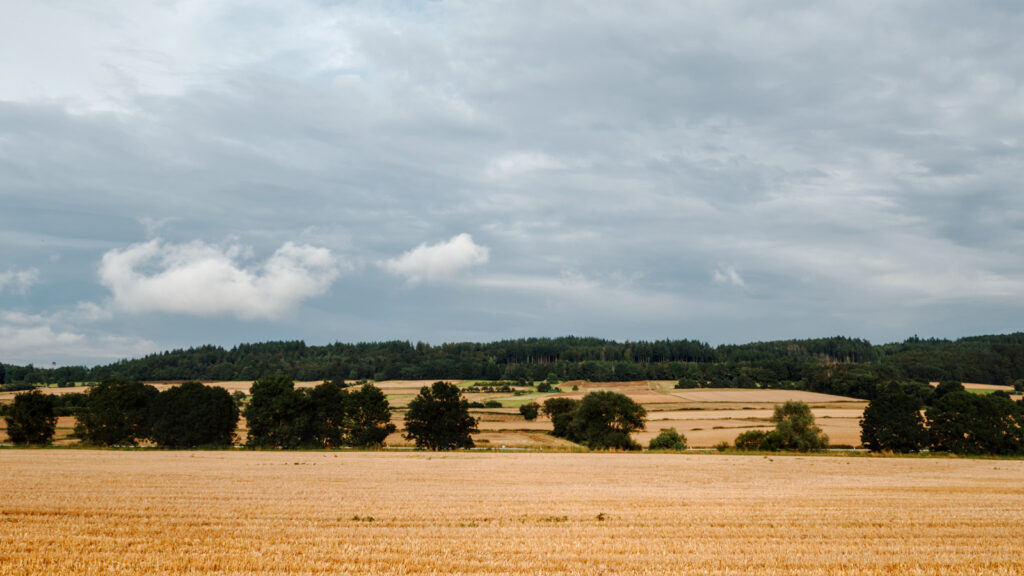
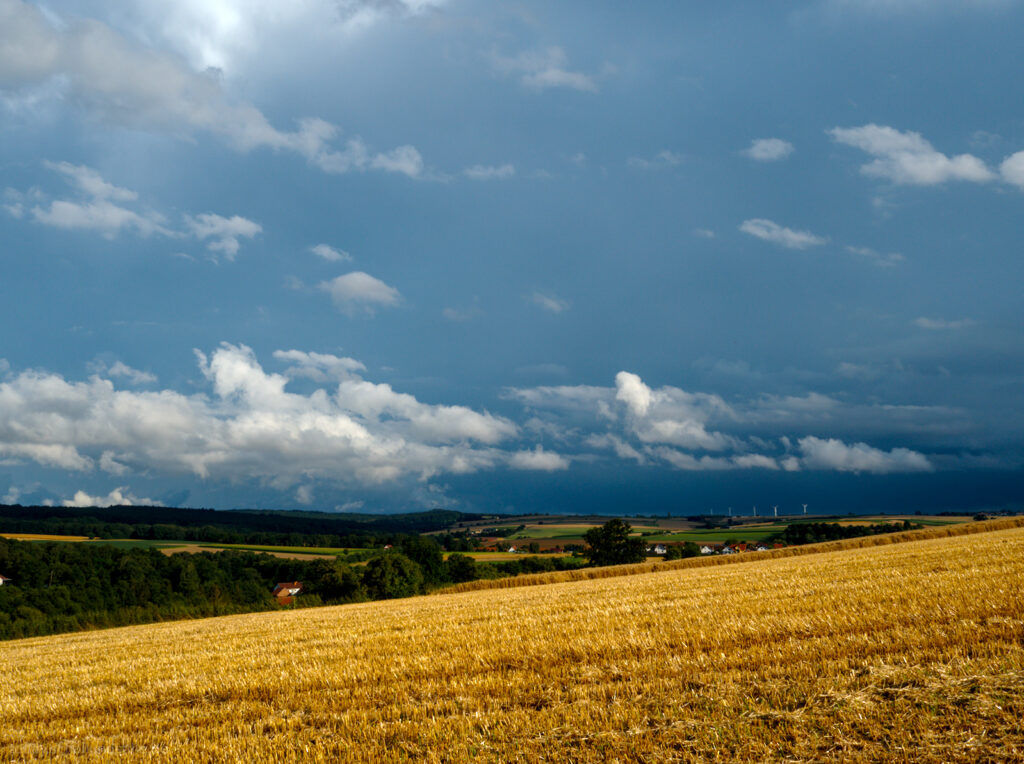
During that time, it looked again and again as if a massive thunderstorm was about to break out – but the clouds remained in the sky; it rumbled and growled above us and a few drops fell, and that was all; the next day it was even hotter and more humid than before.
After a week, Frau K. finally arrived in Gottstreu as well.
She only had a week of vacation, whereas I had two – which is why I’d spent the first few days alone with Buba. Now, those quiet, contemplative days suddenly turned into days spent together, filled with music, long walks, and lovely conversations. I continued working on new demos, we roamed around the area, and this peculiar weather pattern continued to hang over everything: Time and again, dark clouds piled up in the sky; time and again, a major thunderstorm seemed imminent – yet apart from a little rumbling and a few drops, nothing happened. Instead, the air grew heavier, more humid, and more unbearable with each passing day.
By the evening of August 1, the air had finally become so thick that sleep was out of the question. So I sat with Buba in my little room, let the tiny, cheap, green, yet utterly charming Behringer RD-6 rumble away, and kept working on “Trendula.” The rumbling drum solo in the middle of the track was created that very night.
I cranked the RD-6 right up into distortion – a setting that SynthTubers and other self-proclaimed experts like to claim sounds terrible and is completely useless. Me, on the other hand, was absolutely thrilled by that very broken, overdriven sound. Maybe I just have no taste… or maybe people are just a little short on imagination.
And then, just like that, a miracle happened:
It began to rain.
First a few scattered drops, then more and more rain, and finally a veritable, long lasting downpour. Frau K. and I ran outside, joyfully tearing our clothes off and dancing barefoot around the house, while the heat finally washed over us and the whole world smelled of wet earth.
It rained on and on, all night long, and for the first time in days we slept peacefully and deeply, not like sardines in our own juice.
When we woke up the next morning, it was immediately clear that something had gone wrong, because it was wonderfully quiet and you could hear the lively chirping of the birds.
Normally you can’t, because although it’s truly beautiful at our friends’ wooden cabin, the location has one major drawback: it’s right next to the B80 (the so called “Bundesstraße”. In Germany, we have two kinds of motorways: The Autobahn, where people drive too fast and kill each other in pursuit of their so called “freedom”; and the Bundesstraße, where people are doing the same thing, only at a smaller scale)
During the summer months – holidays, weekends, basically any afternoon warm enough to liquefy common sense – the B80 becomes a pilgrimage route for people whose highest calling in life is to force complete strangers to participate in the acoustics of their midlife crisis. The entire ritual is held together by the national theological constant known as “freedom,” which in this context means converting gasoline into noise at a rate measurable from twenty miles away.
Or, to put it more succinctly: The B80 is a hotbed of wild and unbridled petromasculinity (yes, there actually is a word for it, and it will come up again).
It didn’t take long for us to find out what was going on. In Gottstreu, the neighbours were standing in the streets, discussing the situation excitedly. The rain had been heavier and more intense than we’d realised in Gottstreu. There had been flooding in the neighbouring villages; cars had been swept into one another, roads had been washed away and rendered impassable, and water was standing in the cellars.
We were shown pictures from Gottsbüren and Gieselwerder – destroyed squares, destroyed roads, and an emergency camp on the market square where we had been strolling and shopping so comfortably just yesterday. Images that eerily evoked the Ahr Valley floods of 2021. And finally, Frank, our landlord, rang us and asked, full of concern, whether we were all right and whether we had got through the night unscathed.
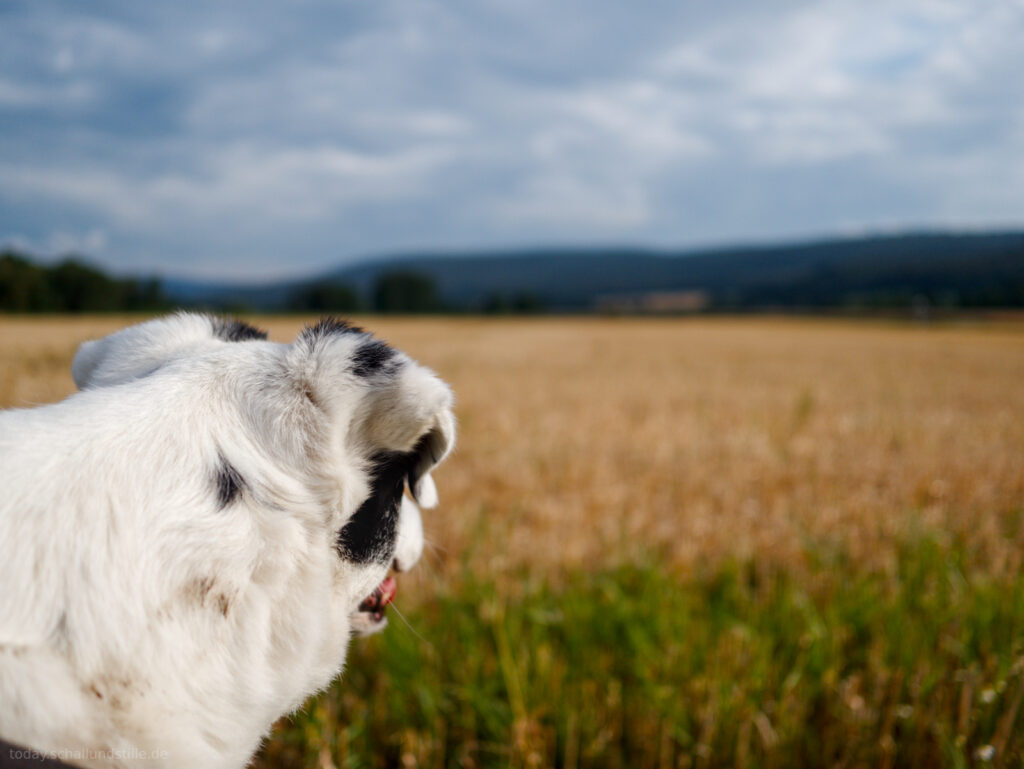
Somewhat shocked by the news, we set off with Buba on our morning walk, which would take us along the B80 and across a few fields to the River Weser, and sure enough: a barrier had been erected across the road, along with a sign informing motorists that the road was closed due to flooding.
Two motorcyclists, a man and a woman, were standing by the barrier, looking both confused and annoyed. “What’s going on? Why can’t we get through here?” the man wanted to know.
“Because we’ve had a storm and Gieselwerder has been flooded…”, I began to try and explain.
“Oh yeah? That’s bullshit, we’ve come all the way from Dortmund just to ride this route – we do it every year – they can’t just close it off! That’s an outrage!”
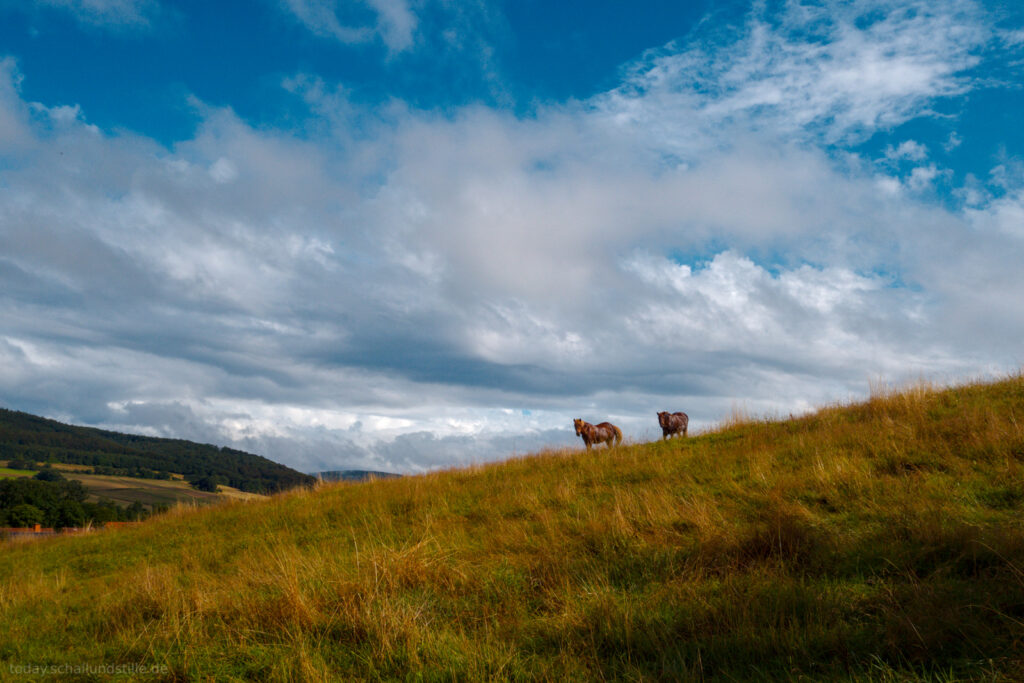
I took a deep breath and tried to stay calm.
Because at that moment it dawned on me that I was dealing with two people who were quite seriously complaining that they wouldn’t be able to emit CO2 into the atmosphere to their usual extent today, because Mother Nature had just given them a truly tiny and harmless foretaste of what the climate will look like in 100 years’ time if CO2 continues to be emitted into the atmosphere.
“Yes, they can. There’s no road; the water has washed the road away,” I replied after a brief pause to gather my thoughts and reflect.
That finally made an impression on him.
“What?” he asked, dumbfounded.
“Road. Washed away,” I repeated.
“That bad, then?” he asked.
I nodded.
Shaking their heads, they finally walked off, swung themselves onto their bikes and roared off towards Hannoversch Münden.
In a manner that sends shivers down the spines of rational people, what had already happened in the Ahr Valley back in 2021 soon repeated itself in the surrounding villages: very few people want to hear the words “climate change”. Instead, the real culprit was identified very quickly: the Greens.
(nb: among many Germans, especially in rural areas, it has become something of a sport to blame the Green party for everything that is happening – the result of a political campaign very sucessfully instigated by far-right media moguls Axel Springer Verlag)
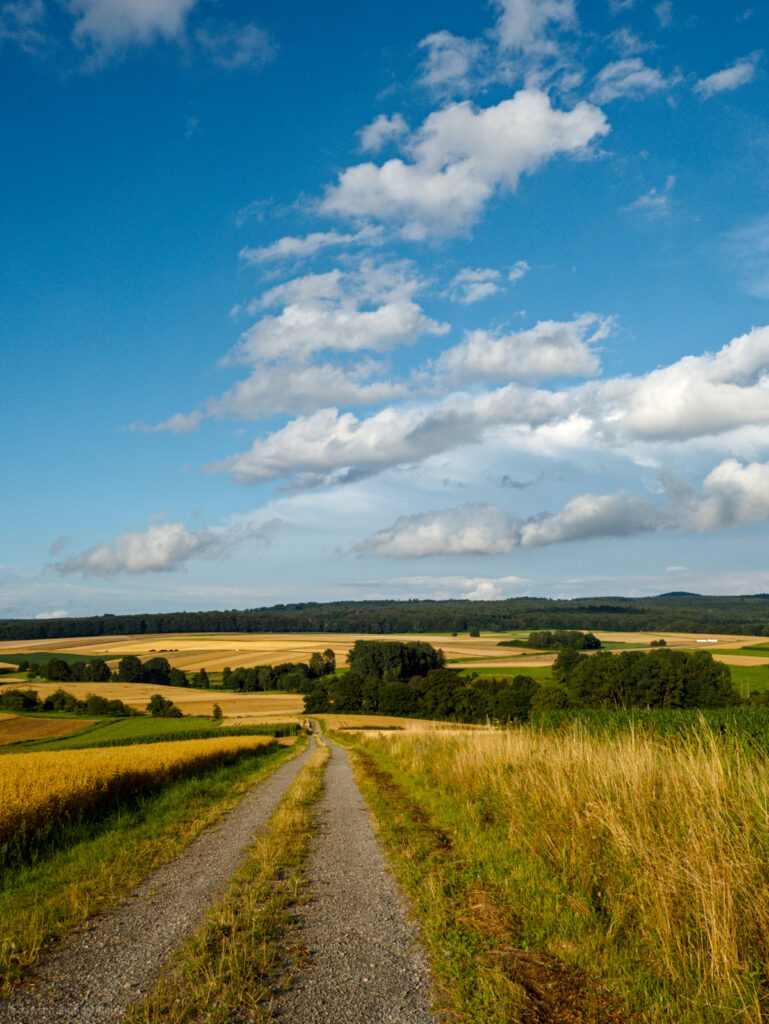
So according to certain groups, the root cause of the disaster was not the empirically proven fact that, on the night of 2 August 2024, an extreme weather event – exacerbated by climate change – had taken place, during which 169.8 litres per square metre of rainfall fell over the Westeral region –more than on any other day since records began… but rather the wind turbines.
It is important to note that the wind turbines in the Reinhardswald are a contentious political issue: for years, certain groups have been stirring up opposition to these clean energy generators, claiming they spoil the landscape. For these groups, the flood disaster was a proverbial godsend, for, why of course – the wind turbines are to blame! The access roads built for their construction, so the narrative goes, channelled all the heavy rain downwards.
I don’t wish to cast doubt on the fact that the access roads quite possibly also played a part in the disaster… but they were not the only factor, and certainly not the defining factor. No type of soil could have absorbed such vast quantities of water, and certainly not the earth in the Reinhardswald, which had been completely parched out by the drought of recent years.
Yet many people in the Weser Valley were only too happy to accept the narrative that the wind turbines were the sole cause of the flooding, because that meant that no one would have to change their ways, and that it wasn’t CO2 emissions, fossil fuels or Hans’ fancy new Porsche that played a part in the disaster, but filthy left-wing do-gooders who put ugly wind turbines in people’s lovely forests. Fuck you Greta, Habeck go home, etc. etc.
Wind turbines aside – the flood was, after all, to become a recurring theme on “Strategies Against Algorithms”.
Both the very real flood that had raged through the Ahr Valley and through Gieselwerder and Gottsbüren, and the figurative flood from “flood the zone with shit”, that highly effective ploy used by populists to undermine public discourse by flooding the space with so many claims, half-truths, outrages and distractions that eventually no one knows what is true anymore.
Once back home, “Trendula” gradually took shape in my home studio. I picked up the trusty old red Fenix bass – which my good old friend Martin has been storing at my place for 20 years – added a few melodic elements on the Waldorf M, and finally layered some eerie strings from the Kurzweil on top. The song became increasingly dense and darker in the process; I’m very pleased that (at least for me) the muggy heat, the thunderstorm and the strange atmosphere of the Weser Valley are reflected in the sound.
The lyrics also began to take shape slowly. The original placeholder lines initially consisted of “everything, everything, take it away, take it away” – but little by little, further impressions from those two weeks began to accumulate there, as did thoughts about what was happening socially and politically around us at the time (and continues unabated today). “Every vote that Elon bought / Every truth you never sought / Every profit soaked in blood / Every village drowned in flood”
And in the chorus, over and over again, “Take it away, take it away” – run through the vocoder of my Wavestation A/D and distorted to such an extent that this incantation itself seemed to be struggling against a flood.
With the rest of the lyrics, the line eventually took on a double meaning: on the one hand, my deeply felt and exhausted wish that all this madness might finally come to an end. On the other hand, the warning from the Trendula saga that things which have been out of control for a long time do not eventually come to an end of their own accord, but that a higher power puts an end to them. And this higher power has now shown us a few times that it is gradually fed up with us and our inability to live in harmony with our environment.
Mother Nature doesn’t need us.
And so we have come full circle, for we and the nature of the social discourse we have now reached are the sadistic, relentless giantess that has spiralled out of control – and even if I still harbour a microscopic shred of hope that perhaps it will not come to that, the ‘great deluge’ is, alas, probably inevitable.
And we will have deserved it.
Leave a Reply